
Facts & prices checked: 2026-06-16
The single most common migration mistake is treating it as one event with one date. It is a continuous, roughly clockwise loop driven by the rains and the grass. There is no month with no migration — only different chapters in different places. Pick your chapter, then put yourself next to it.
Month by month: where the herds are
| Month | Location | What you see | Camp zone |
|---|---|---|---|
| Jan | Southern plains, Ndutu | Calving beginning, short grass, predators | South/Ndutu |
| Feb | Southern plains, Ndutu | Calving peak, lion/cheetah hunts | South/Ndutu |
| Mar | Southern and western drift | Herds moving, green plains, less predictable | Central/South |
| Apr | Western corridor, Grumeti | Long rains, herds fractured, fewest vehicles | West (if open) |
| May | Western corridor | Long rains continuing, some crossings at Grumeti | West (if open) |
| Jun | Western corridor to north | Rut begins, herds column north, Grumeti crossings | West/Central |
| Jul | Northern Serengeti, Mara River | First Mara crossings, building to peak | North/Kogatende |
| Aug | Northern Serengeti | Peak crossings, dust, chaos, crowds | North/Kogatende |
| Sep | Northern Serengeti | Crossings continue, herds still in north | North/Kogatende |
| Oct | Northern, beginning south | Final crossings, short rains beginning | North or Central |
| Nov | Central, drifting south | Short rains, green flush, calves from prior year | Central/South |
| Dec | Southern plains build | Herds return south, early calves possible | South/Ndutu |
What actually drives the migration (it is not a schedule)
The migration follows rain. More precisely, it follows the grass that rain produces — specifically, short-grass growth on mineral-rich volcanic soils that wildebeest prefer for calving.
The Serengeti receives an average of 900–1,000 mm of rainfall per year across most of the ecosystem, rising to up to 1,400 mm in the wetter north and falling below 800 mm in the drier southeast. The southeastern short-grass plains around Ndutu sit on the volcanic substrate of the Ngorongoro highlands. When the short rains arrive (November to December), they trigger a flush of new short grass on these plains. The herds drift south and east to graze. Calving happens here because the short grass gives predators nowhere to hide — calves born on open plains can outrun most threats within minutes.
As the long rains begin (March to May) and then taper, the vegetation on the southern plains dries and becomes less nutritious. The herds move northwest toward the western corridor and the Grumeti River. From June onward, they continue north toward the Mara River and the greener northern Serengeti, where rainfall is higher and the grass remains edible.
Why the timing varies: The exact week the herds reach the Mara River crossings can shift by 4 to 6 weeks depending on when and where rainfall actually arrives. A camp guide watching the real-time grass condition has better predictive accuracy than any fixed calendar. When operators say “the crossings are early this year,” they mean the rain was early and the herds followed. This is not a spectacle on a timetable — it is a biological response to conditions.
I once watched a guide spend 20 minutes on the radio before our morning drive, comparing notes with three other drivers about where the herds had moved overnight. That is the actual intelligence network that tracks the migration — not a chart.
The calving season in depth (January–February)
The calving season is the migration chapter most people do not plan for, which makes it consistently underbooked and outstanding value relative to the August peak.
Between late January and the end of February, an estimated 400,000 to 500,000 wildebeest calves are born on the short-grass southern plains around Ndutu, an area at the Serengeti’s southern border abutting the Ngorongoro Conservation Area. The reason it happens here: the short grass gives calves the best chance of outrunning predators on their first day of life. Wildebeest calves are on their feet within minutes of birth. On days with active calving, the plain is alive with newborns, mothers, and every large predator in the area.
What the calving season is actually like: It is not gory in the way people sometimes fear. It is continuous, and the hunting is intensely visible. Lion prides position near the birth areas; cheetahs sprint after calves within the first week; hyena clans follow the herds through the night. A single morning drive can produce more predator-prey interactions than a week on a quieter African reserve.
Who it suits: Anyone doing their second or third Tanzania safari, honeymooners who want something beyond pure scenery, and wildlife photographers chasing action rather than landscape.
Practical camp choice: Based around Ndutu itself or the southern Serengeti border camps. Ndutu Lodge, Ndutu Safari Lodge, and the seasonal mobile camps that set up in the basin are the right options. The Serengeti central camps (Seronera) are too far; you spend 1–2 hours each way that could be game-viewing time.
The river crossings in depth (July–October)
The river crossings at the Mara River in the northern Serengeti are the migration image that most people carry in their heads. Thousands of wildebeest on a bank, the decision to go, the plunge, the crocodiles, the chaos on the far side.
The honest version: Crossings are not guaranteed on any given day. Herds gather at the river, sometimes for hours, sometimes for days, before one animal triggers the collective decision and the herd follows. On a 3-night stay in the north during August or September, most people see at least one crossing. On a 1-night visit, you may see none. Book 3 nights minimum.
Where to position: The northern Serengeti around Kogatende, near the Mara River. This area has both permanent camps and seasonal mobile camps. Key crossing points include the Second Crossings area, Lookout Hill, and several river bends used repeatedly year after year. A guide who has been doing these crossings for five or more seasons knows which bends are most active for your specific week.
The crowds factor: This is the Serengeti’s busiest area in its busiest season. Vehicles queue at river banks waiting for crossings. The Tanzanian northern Serengeti generally has fewer vehicles than the equivalent position on the Kenyan Masai Mara side — a meaningful difference if crowd-free game viewing is important to you. See the Serengeti vs Masai Mara comparison for the cross-border breakdown.
The Grumeti crossings (June): Often overlooked, the Grumeti River crossings in the western corridor in May and June offer a different, less crowded version of the same drama. The Grumeti crocodiles are among the largest in Africa — the river is narrow and the ambush is violent. Fewer vehicles, and the camps in the western corridor tend to be excellent.
The honest uncertainty about river crossings
Most migration content presents crossings as a reliable highlight. The reality is more variable, and worth knowing before you book.
On any given day at the Mara River during peak season, there may be zero crossings. The herds gather, mill around, move upstream, move back downstream. Sometimes they cross multiple times in a single morning — upstream, downstream, back again. Sometimes nothing happens for three or four consecutive days. The trigger appears to be social rather than logical: one animal goes in, others follow or do not. The best guides at the river can read certain behavioural signs — agitation in the herd, unusual bunching near the bank — but no one can predict the exact minute.
What this means practically:
- A 2-night itinerary in the north gives you low odds of a crossing. Many people see nothing.
- A 3- to 4-night itinerary improves odds substantially. Most visitors over 3 nights during August or September see at least one crossing.
- A 5-night itinerary makes a crossing almost certain during peak season and often produces multiple events.
Some crossing points produce more crossings than others in a given year because the water level and bank configuration change with rainfall. A guide or camp manager who has been at the same crossing sites for 5 or more seasons tracks this and adjusts recommendations week by week. This local knowledge — which bend is active this particular August — is worth more than any published crossing map.
I have watched groups who drove 4 hours each way on a day trip to the crossing country and left having seen nothing. I have watched groups who stayed 4 nights and witnessed three separate crossings of 2,000 or more animals each. The difference was not luck — it was time.
How many wildebeest are there? (A contested question)
The traditional figure cited in tourism materials is approximately 1.3 million wildebeest in the Serengeti-Mara ecosystem — sometimes inflated to 1.5 or 2 million by promotional materials.
The 2023 TAWIRI aerial census (Tanzania Wildlife Research Institute) counted 1,366,109 wildebeest ± 231,741, consistent with the established population baseline that has remained broadly stable since the late 1970s.
In September 2025, a study by Duporge et al. published in PNAS Nexus used artificial intelligence and satellite imagery to count the same herds and arrived at dramatically different figures: approximately 324,000 to 338,000 wildebeest in 2022, and 503,000 to 533,000 in 2023. The Oxford-led research team suggested the traditional aerial count methodology has systematically overcounted for decades.
These two sets of figures are fundamentally incompatible, and the scientific community has not resolved the discrepancy. The satellite study is methodologically novel; the aerial census methodology has been the operational standard for decades and is used for management decisions.
What this means for travellers: The herds are large enough that the crossing spectacle is unchanged regardless of which figure is accurate. What it does mean is that the 1.3 or 1.5 million figure quoted in brochures is not a settled fact but an estimate with significant uncertainty attached. Guides who have been on the ground for 20 years can describe the visual impression — how far the herds stretch, how long a crossing takes to move through — better than any number.
Balloon safaris: timing and what to expect
A hot-air balloon flight over the Serengeti costs USD 599 per person for a shared flight, which includes the TANAPA ballooning fee of USD 40 and a champagne breakfast after landing. Private hire starts at approximately USD 1,200. Flights depart daily at 06:00 from four launch sites within the park, and the active launch site shifts by season to follow the concentration of wildlife.
The flight itself lasts approximately 50 to 70 minutes at low altitude over the plains, giving a perspective on the landscape that no game drive can replicate. At sunrise, the light is extraordinary — golden-orange across open grassland with herds visible from above.
Best months for the balloon:
- July to October: The balloon follows the northern herds near the Mara River. Seeing a concentration of thousands of wildebeest from above, moving across open ground, is the closest thing to the god’s-eye view of the migration.
- January to February: Flights operate over the calving plains near Ndutu. From above, the scale of the calving — the sheer area covered by moving animals — is impossible to appreciate from a vehicle.
Green season balloon: Flights operate year-round, including the green season. The advantage is dramatically lower crowds and beautiful landscape; the tradeoff is that herds are more dispersed and sightings from above are less concentrated. For photographers who want the balloon as a landscape shot rather than a wildlife count, the green-season version can actually be more interesting visually.
The pre-dawn pickup — typically around 04:00 from camps — and the early morning cold are part of the experience. By 08:00 you are eating breakfast in the bush with a Serengeti sunrise behind you. It is a standard that is hard to match anywhere else.
The green season (November–December and March–May)
The green season is called “secret season” by operators who want to sell it and “the quiet months” by travellers who have experienced them. The honest version is somewhere between.
What the green season offers:
- Dramatically lower prices — often 30–40% below peak rates at the same lodge
- Green, photogenic scenery; the Serengeti in the dry season is brown; in the green season it is lively with growth
- Fewer vehicles at sightings — sometimes dramatically so
- Resident wildlife concentrated around water and permanent grass
What you trade away:
- Vegetation is high, making spotting harder (animals are there; finding them takes longer)
- The long rains (April–May) can affect road access to some areas, particularly the west
- Some mobile camps close entirely in April–May, reducing options
The November–December window is particularly good: short rains bring a green flush and the herds are returning south with young animals from the year’s calving in a large, mixed herd. Some predators are in excellent condition after the long northern summer and are actively hunting.
How to match camps to months
Southern/Ndutu focus (Jan–Mar): Ndutu basin and southern Serengeti border camps. Mobile camps in this area move to be near the calving action. Ndutu Lodge is the original and still excellent; many newer seasonal camps cluster nearby.
Central Serengeti/Seronera (year-round): The classic base that works adequately in most months. Best for June when herds transit through, or October–December when the plains are building. Not optimal for the crossings (too far) or the calving (better camps further south).
Western Corridor/Grumeti (May–Jun): Specialist area for the Grumeti River crossings and for the green-season experience. Several premium camps here have access rights that keep vehicles out of designated zones.
Northern Serengeti/Kogatende (Jul–Oct): The crossing camps. These fill earliest and command the highest prices of any Serengeti zone. Book 6–9 months ahead for July–August. Some camps here are literally on the river bank with viewing decks directly above crossing points.
Mobile/seasonal camps: The cleanest solution for anyone who wants the migration and does not want to commit to a fixed zone. A good mobile camp moves two or three times per year to be where the herds are, and the guides are committed to following the movement rather than staying near permanent infrastructure.
Big cats by season
The migration drives predator concentrations, but big cats live in the Serengeti year-round and some seasons are better for specific species regardless of where the herds are.
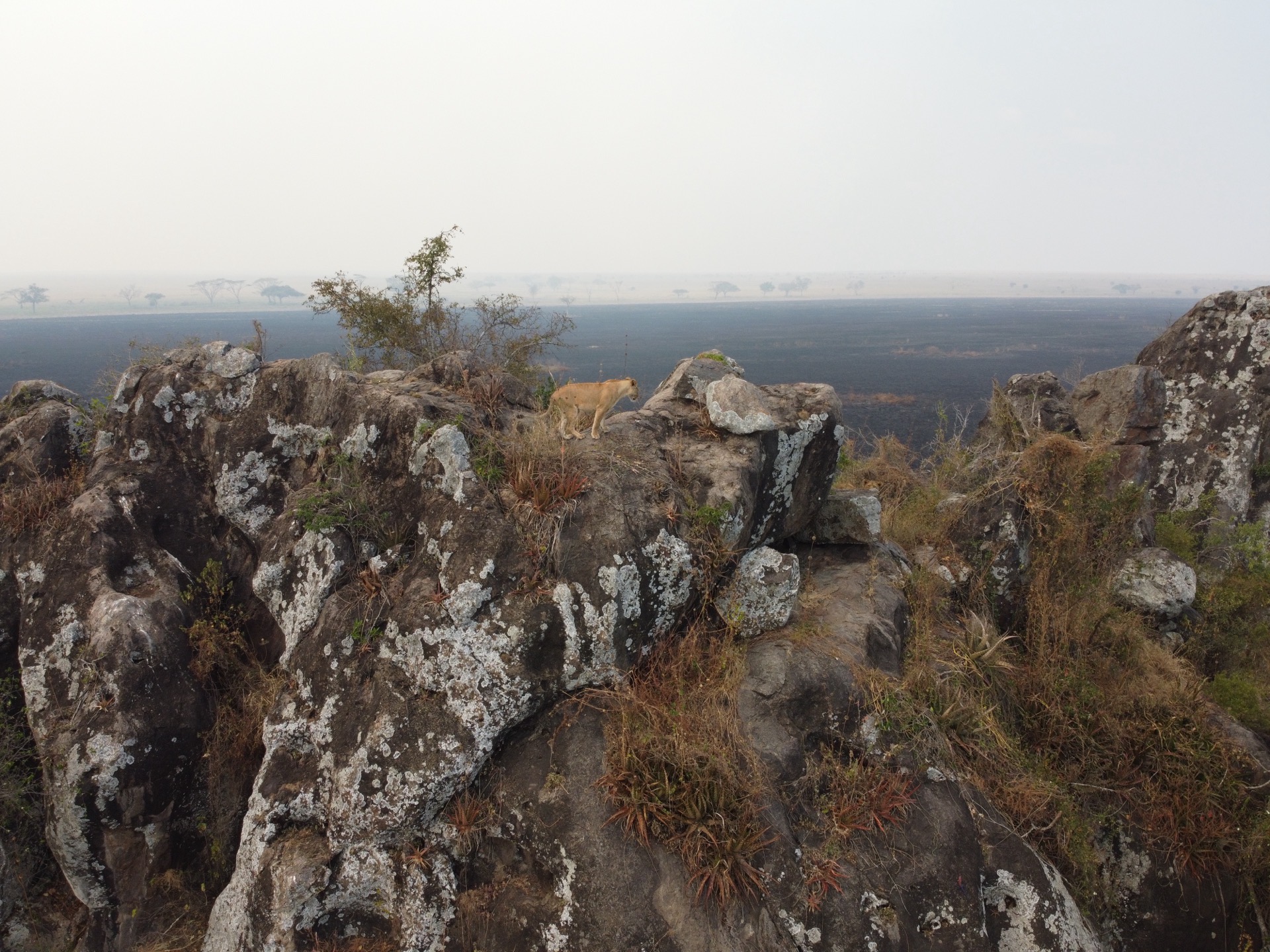
Lions are resident across the Serengeti and always present. During the calving season (January–February), pride activity increases around the Ndutu basin as easy prey arrives in volume. During the dry season (June–October), lions are more visible because vegetation is shorter and they concentrate around water. The Serengeti has the world’s highest density of wild lions.
Cheetahs are easiest to see on the open short-grass plains of the south and around Ndutu, where flat terrain lets them hunt at full sprint. January–March is the best season, with calves providing easier prey and the grass short enough for long sightlines. The central Seronera area has resident cheetah territories that are active year-round.
Leopards are more or less equally distributed year-round but are hardest to spot. The riverine woodland around Seronera is the classic leopard territory, and individuals regularly use the same trees day after day — a guide who has been working the area for years knows which ones. Dawn is the best window before they disappear into the canopy.
Spotted hyena are far more active and interesting than most visitors expect. At Ndutu during calving, clans move through the birth areas continuously through the night. Night drives (where offered by camps) in February and March are extraordinary for hyena activity.
Wild dogs (African painted wolves): Rare in the Serengeti compared to the southern parks, but occasional sightings happen in the western corridor and around Loliondo on the eastern boundary. Ruaha and Nyerere (Selous) are better primary destinations if painted wolves are a specific target, though combining them with the Serengeti in one trip is entirely doable with internal flights.
What to bring: migration-specific kit
The Serengeti in the dry season (particularly July–September) is dusty. Very dusty. This affects gear choices:
- Sealed camera bags — fine white volcanic dust penetrates everything. A good camera bag or a pelican-style case for travel between camps.
- Lens cloth and blower — carry both in your game-drive bag. Dust on a front element ruins shots.
- Warm layers (all months): Dawn temperatures on the Serengeti plains can be 10–14°C in dry season. An open vehicle at 60 km/h feels significantly colder. Even in February the early morning is brisk.
- Dust-proof case for phone and electronics — especially for western corridor and northern camps on dirt tracks.
- Binoculars per person: 8x42 is the standard recommendation. See the safari packing list for the full gear breakdown.
The precise timing of a crossing depends on the behaviour of a single wildebeest. You cannot predict it; you can only position yourself well and commit the time. The best migration guides in the northern Serengeti know which river bends get afternoon sun from the west (better for photography in the late afternoon), which banks the herds prefer when water is running high, and which crossings tend to happen after the wind changes. Experience is the variable that determines crossing probability as much as luck.
Common booking mistakes
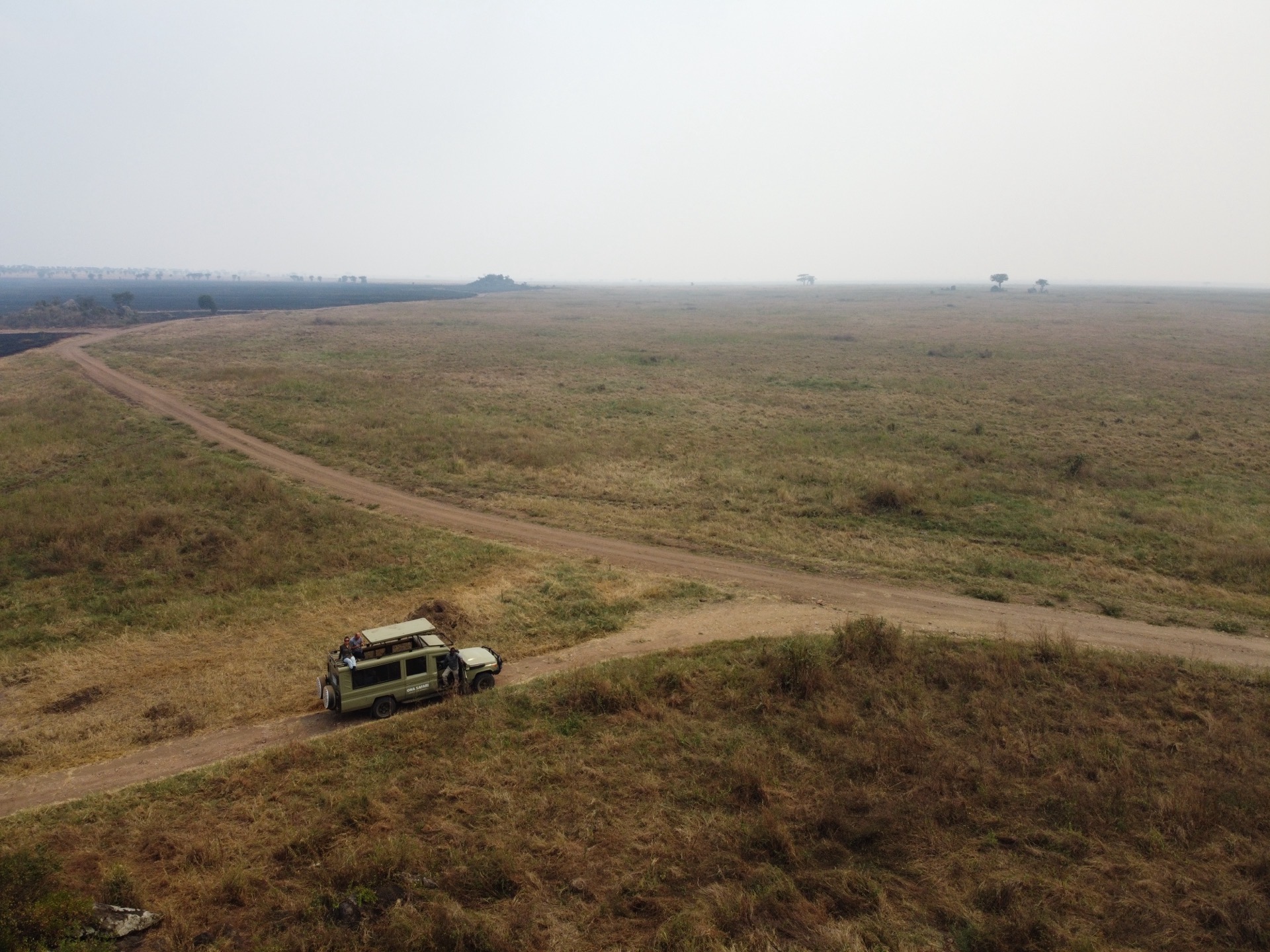
Booking a southern camp for August crossings. The herds are in the north from July onwards. A permanent camp near Seronera gives you a 3–4 hour drive each way to the northern crossing areas, burning your morning and evening game-drive time.
Expecting a crossing on a fixed date. The herds are not on a schedule. On a 2-night itinerary in the north, you may see nothing, or you may see two crossings. On a 5-night itinerary you are very likely to see at least one.
Choosing a camp that can’t get to the crossings before 09:00. The best crossings happen in the first hours after dawn when animals are moving. A camp that is 2 hours from the river cannot position you for the early window.
Not asking the operator what month the camp is positioned for. Some permanent camps market themselves as “migration camps” year-round. A permanent camp in the central Serengeti is a central camp, not a crossing camp. Ask directly: what season is this camp positioned for, and is it the season I’m travelling in?
Where Zanzibar fits in
Most travellers combine a Serengeti trip with the coast. The migration’s strong windows (February calving or August crossings) both pair well with Zanzibar timing. After early-morning game drives, the east coast is the right kind of slow. See our 10-day Tanzania and Zanzibar itinerary for how to sequence it, and getting to Zanzibar for the Serengeti-to-ZNZ connection. Full park context in the Serengeti National Park guide. For the geographical dimension of the migration — which zone to book for each month, how far Seronera is from the crossing country, and how to combine zones — see the Serengeti zones guide. For Tarangire’s seasonal patterns — a different park with its own dry-season elephant concentration peak — see the Tarangire when to go guide. For Ngorongoro’s seasonal logic — which is fundamentally different (year-round resident wildlife, conditions-driven rather than migration-driven) — see the Ngorongoro when to go guide.
Frequently asked questions
When are the Serengeti river crossings?
The dramatic Mara River crossings happen mainly from July to October, peaking in August and September, in the northern Serengeti near the Kenyan border. Crossings are unpredictable day to day, so plan at least 3 to 4 nights in the north to improve your odds.
When is the wildebeest calving season?
Calving peaks in late January and February on the southern short-grass plains around Ndutu, when hundreds of thousands of calves are born within a few weeks. It is the best time for predator action.
What is the best month for a first safari?
For classic dry-season game viewing, June to October is easiest — sparse vegetation, animals concentrated at water. For crossings choose August or September; for calving and predators choose February.
Is the green season worth it?
Yes, often. The green or secret season (November to early December, and March to May) brings lush scenery, newborn animals, fewer vehicles and lower prices. The long rains (April to May) are the quietest and best value, with some camps closed.
How many wildebeest are actually in the Serengeti?
The number is genuinely contested. The 2023 TAWIRI aerial census counted approximately 1,366,109 wildebeest (plus or minus 231,741). A 2025 Oxford University satellite study published in PNAS Nexus estimated far lower counts — around 324,000 to 338,000 in 2022 and 503,000 to 533,000 in 2023. Both sets of figures are from credible sources. The traditional figure of 1.3 million has been the operational standard; the satellite study is contested and ongoing.
How much does a Serengeti balloon safari cost?
A shared hot-air balloon flight costs USD 599 per person, which includes the TANAPA ballooning fee of USD 40 and a champagne breakfast after landing. Flights depart daily at 06:00 from four launch sites within the park; the active launch site varies by season to follow the herds. Private balloon hire starts at approximately USD 1,200.
What month is best for a Serengeti balloon safari?
Balloons operate year-round, but the best months align with concentration of wildlife: July to October for the crossing herds in the north, and January to February for the calving plains in the south near Ndutu. The launch site shifts with the herds, so the balloon follows the migration rather than flying from a fixed spot.
What drives the migration route — is it a schedule?
The migration is not on a calendar — it follows rainfall and grass growth. The clockwise loop covers roughly 800 km per year. The southern plains (Ndutu, Ngorongoro border) receive short-grass growth after the short rains, drawing the herds south for calving. As the long rains ease and the grass dries, the herds move northwest, then north toward the Mara River. The exact timing of each transition varies by up to 4–6 weeks year to year depending on when and where rainfall arrives.