
Facts & prices checked: 2026-10-13
The difference between a budget and a luxury safari is smaller than most people expect. It is not the animals, and it is not even the parks. The difference is who is in the vehicle with you, and how long you can stop.
Tanzania is not a budget destination. But a real safari, with strong wildlife moments, is achievable at a fraction of the luxury price, if you understand what you are buying and where the unavoidable costs sit.
What a budget safari in Tanzania costs
Tanzania prices high. The Serengeti sits in the top park-fee tier of the northern circuit, and Ngorongoro adds a separate vehicle descent fee. These costs are non-negotiable, and they fund the parks.
What this means in practice: a “budget” Tanzania safari still costs roughly USD 250–300/person/day for a group tour with shared vehicle and camping (aggregated estimate, volatile). This is not backpacker budget. It is budget relative to the USD 600–1,100+/day that the luxury tiers cost.
The budget option is not a compromise experience. The elephants in Tarangire (park fee USD 59/day) are the same elephants a private concession shows at a far higher price. The Serengeti wildebeest do not check your lodge price before crossing. What changes is the service layer, not the safari core.
What budget gets you: tier breakdown
Aggregated price estimates (volatile, so confirm with operators) put Tanzania safaris in four tiers, based on per-person per-day all-inclusive cost:
About USD 250–300/person/day: budget camping tier
- Shared vehicle with other travelers
- Public campsite or basic budget lodge (twin share)
- Group game drives on a fixed schedule
- All meals and park fees included in reputable packages
- Guide shared across the group (quality varies widely, see below)
About USD 375–425/person/day: mid-range
- Often a private vehicle for your group only
- Mid-range lodge rather than camping
- Game drives on your schedule, not a fixed timetable
About USD 600–700/person/day: luxury
- Lodges and tented camps with full service
USD 1,100+/person/day: luxury-plus
Going below the budget tier is possible only with significant compromises: skipping the Serengeti (the most expensive park), camping with basic operators who cut corners on food or vehicle maintenance, or doing only 1–2 nights to minimise park fees.
The budget camping tier is the real budget safari. What you give up is flexibility and comfort. What you keep is the wildlife.
Park fees: the unavoidable floor
Park fees are paid to TANAPA (national parks) or NCAA (Ngorongoro Conservation Area) regardless of which operator you use. They are per person, per 24 hours (not per calendar day) which matters if you enter a park in the afternoon.
Published park fees:
- Serengeti: USD 82.60/adult/day non-resident in peak season, USD 70.80 in the short low season (TANAPA figures; rates adjust annually)
- Ngorongoro: USD 70.80/adult/day conservation fee + USD 295/vehicle/descent crater service fee (NCAA tariff)
- Tarangire and Lake Manyara: USD 59/adult/day, lower than Serengeti
- Mkomazi: USD 35.40/day adult
The three-layer structure matters: you pay (1) conservation/entry per person, (2) vehicle entry, and (3) concession/campsite fee if staying inside the park. Budget packages bundle these, but a headline rate that excludes park fees is a red flag.
The Ngorongoro crater descent fee of USD 295/vehicle is the key figure for budget planning. Split across 6 people that is USD 49/person, which is manageable. In a private vehicle with 2 people it is USD 147.50 each just for one descent into the crater. This is why Ngorongoro is harder to justify on a strict budget than a second day in the Serengeti.
Budget strategy 1: choose fewer parks
The biggest money-saving decision is also the best decision for the safari experience: go to fewer parks and spend more time in each.
Five parks in 7 days means very little time in each park once you subtract travel days. You see the highlights of each place and the depth of none. Park fees accumulate daily regardless of how many game drives you manage.
A budget-friendly 3-park combination for 7–8 days:
Tarangire (2–3 nights) → Ngorongoro (1 night, crater descent) → Serengeti (3 nights)
This gives: Tarangire’s exceptional dry-season elephant concentrations along the river (July–October), Ngorongoro’s crater in one focused day, and three mornings in the Serengeti where the wildlife density justifies the higher entry fee. Total park days: roughly 7, versus more for a 5-park circuit.
If you want to cut further: Tarangire (3 nights) + Serengeti (3 nights), skipping Ngorongoro entirely. You lose the crater, which is spectacular, but you gain an extra half-day of game drives in the Serengeti for the same budget.
Budget strategy 2: green season timing
Seasons matter for price. The Tanzania mainland seasons:
- Dry / peak (June–October): best general game viewing, highest prices, most visitors
- Short rains / vuli (November–December): shoulder season, lower rates, green landscapes
- January–February: secondary good period, not shoulder prices but manageable
- Long rains / masika (March–May): greenest, quietest and cheapest, some camps close, roads can be impassable
For budget travelers, late October to December is the sweet spot: rates drop from peak (one source cites savings of about 30% in the cheapest window) and the short rains bring green vegetation. Lake Manyara is good year-round; Tarangire is at its best for elephant concentrations from July through October.
A budget Serengeti safari in January–February puts you in the Ndutu calving grounds, where roughly half a million wildebeest calves are born between January and March. This is one of Tanzania’s most dramatic wildlife events. The Tanzania wildebeest guide explains the biology of the calving surge and and why Ndutu in February is such a strong wildlife month.
March is a viable second choice for budget timing: shoulder before the heavy rains, with many operators offering discounts and the parks notably less crowded. The gamble is whether the long rains start early.
April–May: best avoided. The Serengeti tracks can become impassable even with 4WD. Some camps close. Game viewing is affected by long grass. The saving is real but the compromise is significant. If you have to travel in April–May, focus on the northern circuit where drainage is better, and budget flexibility for day rescheduling.
Budget strategy 3: group tours from Arusha
Arusha is the hub for Northern Circuit safaris. The local tour operator market here is large and competitive, which helps budget travelers, but it requires more care than booking a packaged trip from home.
Last-minute group tours (3–7 days ahead): Operators with a Land Cruiser going out with empty seats may fill them at a discount. This requires flexibility on dates and itinerary. Ask around at budget lodges in Arusha, and check any operator against the red flags below.
What to verify in any budget operator:
- Park fees included? Get written confirmation.
- Vehicle age and last service? Ask directly. A 2019 Land Cruiser with recent service is very different from a 2009 vehicle with deferred maintenance.
- Spare tire? Road condition in the rainy season can mean punctures.
- Guide’s specific experience? “5 years guiding” is different from “5 years in the Serengeti.”
- What happens if a game drive is cancelled (weather, vehicle breakdown)? Good operators have a plan. Cheap operators shrug.
Red flags in cheap operators:
- Park fees quoted separately in very small print
- No written itinerary or contract
- Driver and guide are different people but the driver has no guiding experience
- No emergency contact number, no affiliation with TATO (Tanzania Association of Tour Operators)
Public campsites: what they are like
Public campsites in Tanzania’s national parks have basic infrastructure: a pit latrine block, sometimes a cold shower, a flat patch of ground, and a camp perimeter that animals can enter. Hyenas visiting camp at night are a known part of the experience.
Budget operators bring the tents, sleeping gear, and kitchen. The cook prepares meals at a camp kitchen setup. Food quality varies by operator. Mornings start before dawn for the game drive; evenings are around the campfire if wood is available.
What public campsites give that lodges do not: immediacy. You are in the park, not on the rim. At dawn you hear lion calls before you hear coffee being poured. For travelers who are comfortable in basic outdoor conditions, this is not a compromise but the preferred experience. For travelers who want a bed and a private bathroom after a long game drive day, the basic budget lodge is the right call.
Camping is the most immersive and most affordable way to experience a Tanzania safari. The Tanzania camping safari guide covers the TANAPA campsite tiers (public campsites with basic facilities, exclusive-use special campsites, wilderness/fly camping), how mobile tented operators work, wildlife in camp at night, and the classic 7-day northern circuit camping itinerary.
Tanzania safari accommodation spans an enormous range, from TANAPA public campsites to sole-use private camps. The Tanzania safari accommodation guide explains every category in detail: what “tented camp” means, what mobile camps are, what fly camps are, and the distinction between national park camps and private concession camps, which controls whether night drives and walking safaris are available.
What NOT to cheap out on
Not every line item on a budget safari is worth squeezing. Four areas where compromising creates worse outcomes:
Guide quality: The guide is the safari. A guide who has worked the Serengeti specifically for 5+ years knows where the cheetah coalition was yesterday, which kopje the lions use at midday, and how to read elephant body language at a distance. A guide rotating through their first year has none of this. Ask directly: how many years specifically in this park? Ask for a reference from a previous group. Good operators are proud of their senior guides. Budget operators who cannot name the guide’s experience are telling you something. Cheetahs are one of Tanzania’s more accessible big-cat sightings: diurnal, open-habitat hunters visible in full morning light on the Serengeti plains without any premium lodge access. For timing, park zones and the calving-season cheetah experience, see the Tanzania cheetahs guide.
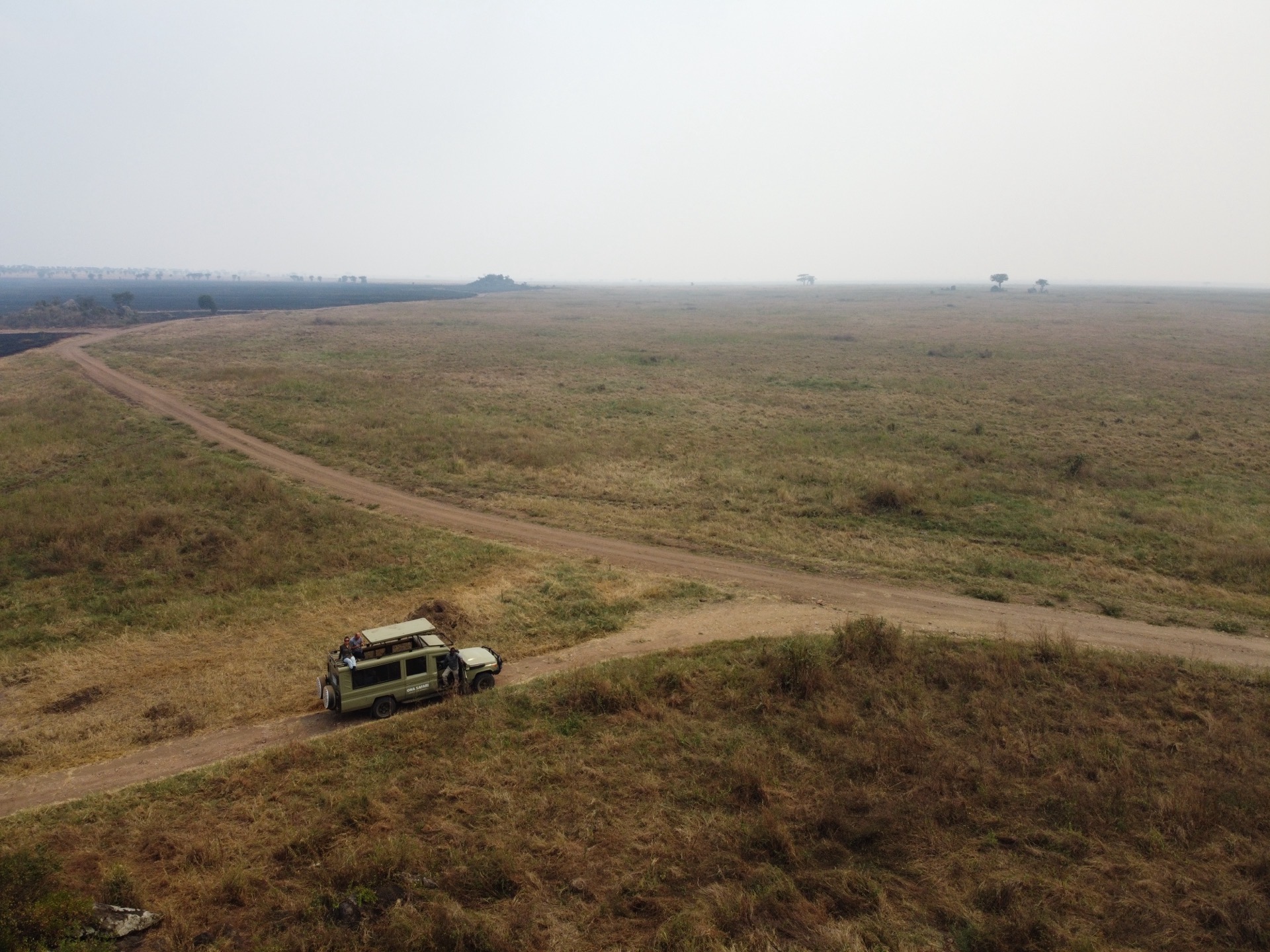
Vehicle condition: A breakdown in Serengeti means waiting hours for assistance in heat with wildlife nearby. Ask about the vehicle age, last service, and spare tire status. A well-maintained older Land Cruiser is better than a newer budget minibus with no service records. Budget Tanzania safaris typically use shared Land Cruiser-type vehicles with a pop-top roof. The Tanzania safari vehicle guide explains what to look for (a working pop-top, window seats for everyone, and the difference between a shared and private vehicle booking) so you know what you are getting before you arrive.
Malaria prophylaxis: Malaria transmission occurs below about 1,800m, which covers most safari areas; the higher Ngorongoro highlands are lower risk. Prophylaxis is standard for safari trips, so do not trim it from the budget. Which drug suits you is a medical decision, so consult a travel medicine clinic 4–6 weeks before departure.
Travel insurance with Medevac: The nearest adequate hospital to a medical emergency in the Serengeti is a Medevac flight away. AMREF Flying Doctors offers dedicated cover for northern Tanzania at about USD 29 per person for up to 14 days.
Combining a budget safari with Zanzibar
The Tanzania safari + Zanzibar beach combination is the classic trip structure, and it works well on a budget with careful timing.
Flight costs: Arusha to Zanzibar flights start from about USD 93 one-way in published lowest fares, more in peak season. Ask your safari operator whether they can book the Arusha–ZNZ flight with the safari.
Zanzibar on a budget: The east coast (Paje, Jambiani, Bwejuu) has a dense cluster of guesthouses and small hotels, usually cheaper than the big resorts, with twin rooms including breakfast. These are real beds with proper roofs, not camping. The east coast trades the north-coast pool scene for a more local feel and quieter beaches.
Timing the combination: If budget is the constraint, look at the shoulder months for both destinations, when safari and Zanzibar rates sit below peak.
Mandatory entry insurance: Which policy you need depends on your first point of entry into Tanzania, and it is one policy per journey. If you land on the mainland first (the usual safari start), you need the NIC mainland policy (mandatory since 1 October 2026; check the current price on the official portal), and it covers the Zanzibar leg too. If Zanzibar comes first, it is the official ZIC inbound insurance (USD 44/adult), best purchased before arrival at inbound.visitzanzibar.go.tz (a counter at the airport sells it if you forget). Keep the certificate and QR code for the whole trip. This is not optional. It does not replace your main travel insurance; ZIC cover is limited to about USD 50,000 medical.
Getting between Tanzania’s destinations affordably is part of the budget safari puzzle. The Tanzania overland guide covers the practical options: the Dar–Zanzibar fast ferry (about 1.5–2 hours, USD 35 economy at last check, deposits you in Stone Town); the Dar–Arusha express bus (about 10 hours overnight; book a named company in advance); the TAZARA railway; and the comparison of when overland beats flying and when flying is the right call.
Mikumi as the budget wildlife add-on from Dar: If your Zanzibar trip already routes through Dar es Salaam, Mikumi National Park is approximately 300 km by road (5–6 hours on the A7), reachable without a domestic flight. Park fee is USD 35.40 per adult per day, the lowest tier in the TANAPA system and well below Serengeti or Ngorongoro. Guided private day tours from Dar start from approximately USD 370 per group. The Mikumi day trip guide covers the logistics, fee breakdown and a comparison of day trip vs 2-night stay, which delivers more game drive time.
How to read a budget operator’s quote
The headline price is rarely the full price. Before comparing two operators:
- Confirm park fees are included. Some budget operators exclude them from the headline figure and add them at the end. On a multi-day Serengeti circuit this can add hundreds of dollars to the quoted price.
- Confirm all meals from arrival to departure. “Full board” sometimes means full board once in the park; the arrival dinner in Arusha and departure lunch are excluded.
- Confirm tipping is not built in. Legitimate operators do not pre-build tips (guide about USD 20–25 per vehicle per day as a group total; camp staff tip box separately). If a quote includes “tips,” clarify what that means.
- Ask for a written itinerary with specific accommodations named. Budget safaris do sometimes substitute campsites or lodges late. A named accommodation in writing is a commitment.
- Check TATO membership. Tanzania Association of Tour Operators membership is not a guarantee but eliminates the least reputable operators.
The budget safari market has experienced operators who run group tours well. It also has very cheap operators who cut corners on vehicle maintenance, guide training, and park fee inclusion. The price difference between a good budget operator and a corner-cutting one is usually worth paying.
→ Related guides: Tanzania safari costs: full budget breakdown · Tanzania northern circuit: park sequence and logistics · Serengeti: season, zones, what to see · Ngorongoro Crater: fees and what you see · Tarangire: elephants and baobabs · Lake Manyara: tree-climbing lions and flamingos · Tanzania safari preparation: full pre-trip checklist · Tanzania and Zanzibar itinerary: combining safari and beach · Tanzania luxury safari: what more money buys
Frequently asked questions
How much does a budget Tanzania safari cost?
Aggregated estimates put budget camping safaris at roughly USD 250–300/person/day, mid-range at USD 375–425 and luxury at USD 600–700; a 7-day budget safari totals roughly USD 1,800–4,200 per person. Going cheaper involves compromises: skipping the Serengeti (one of the most expensive parks), very basic operators, or self-catering at public campsites. Park entry fees alone are USD 35.40–82.60/person/day depending on which parks you visit. Tanzania is not a budget safari destination by global standards, but the wildlife experience per dollar is among the best.
What is a group safari and how does it work?
A group safari is a pre-packaged itinerary with other travelers sharing the vehicle, game drives, and accommodation. Groups are typically 4–6 people in a Land Cruiser or similar. You share the vehicle but have a dedicated guide for the group. This brings costs down significantly compared to a private safari: the vehicle, guide, park fees, and sometimes accommodation are split across multiple people. The trade-off: you do not control the pace, stopping points, or which direction to drive. A good group with good chemistry is great; a mixed group with different expectations is less so.
Is the green season a good time for a budget Tanzania safari?
November–December (short rains / vuli) is a good shoulder window: rates are usually lower, roads are mostly passable and the landscape is green. March is similar, a shoulder before the heavy rains. April–May (long rains / masika): roads in the Serengeti can become impassable even for 4WD and some camps close, so this is the period to avoid. If your trip has to be April–May, focus on the northern circuit and budget for flight days if roads are bad.
Can I do a self-drive safari in Tanzania to save money?
Technically yes, it is legal. In practice it is not recommended without extensive African safari self-drive experience. Tanzania's national parks have poor signage, deeply rutted tracks in the wet, and limited rescue options if you break down. Predators are common near vehicles. A local guide not only finds wildlife but knows which areas are safe to stop, where the cats were yesterday, and what to do if an elephant blocks the road. The money saved on guide fees is not worth the risk for most travelers.
Which parks are best for a budget Tanzania safari?
Tarangire + Lake Manyara is the best budget pairing: entry is significantly less than Serengeti or Ngorongoro, both have excellent wildlife (Tarangire for elephants and baobabs, Manyara for tree-climbing lions and flamingos), and they are close enough to combine in 2 full days without internal flights. If budget allows one premium park: Serengeti for 2 days rather than Ngorongoro: the crater descent fee of USD 295/vehicle adds a large fixed cost on top of person entry. Skip Ngorongoro if you must choose: the Serengeti gives more wildlife per day of your budget.
What's included in a Tanzania budget safari package?
A good budget package includes: accommodation (budget lodge or campsite), all meals from the first dinner, game drives (twice daily in most packages), park entry fees, the guide-driver, vehicle, and airport transfers at Arusha. Not typically included: international flights, visas (USD 50), tips (guide tip about USD 20–25 per vehicle per day, a group total rather than per person; camp staff tip box separately), optional activities (balloon USD 599, walking safari), alcoholic drinks. Always confirm what is included explicitly, because budget operators sometimes omit park fees from the headline rate.
Sources and last verified
- TANAPA tariff: Entry fees for Serengeti, Tarangire, Lake Manyara and Arusha National Parks.
- NCAA tariffs: Ngorongoro conservation fee and crater vehicle charge of USD 295.
- Asilia Africa: when to go in Tanzania: Seasons, calving timing and Mara River crossings.
- AMREF Flying Doctors: Provider of Medevac memberships for travellers in Tanzania.
- Zanzibar Insurance Corporation / Visit Zanzibar: Official source for the ZIC inbound insurance.
.