
Facts & prices checked: 2026-10-11
Lake Natron is a place that sounds improbable until you arrive. A soda lake so caustic that animals which drink from it may die. A colour, red, orange, pink, that comes from microorganisms living in water few creatures can tolerate. And above all of this, a pink haze that turns out, on closer inspection, to be 1.5 to 2.5 million flamingos.
The world’s largest lesser flamingo breeding colony
Lake Natron is the only site in East Africa where large-scale lesser flamingo breeding is known to have occurred since 1962. That is not a modest claim: the lake is the breeding ground for about 75% of the world’s lesser flamingo population. In a good breeding year (the flamingos do not nest every year, only when lake levels and food conditions align) up to 2.5 million birds gather on the caustic flats of this remote Rift Valley lake.
The scale of this concentration has no equivalent in Africa. Lake Natron was designated a Ramsar Wetland of International Importance in 2001 because of its importance for lesser flamingos. When a controversial soda ash extraction project threatened the lake, the Tanzanian government halted it in August 2025, citing the Ramsar status.
Dawn and dusk give the best light on the lake, when the water shifts from red to orange to gold.
The lake itself: chemistry and colour
Lake Natron is a highly alkaline salt lake in the northern Ngorongoro District of the Arusha Region, part of the Eastern (Gregory) Rift system, surrounded by the stark volcanic landscape of the Rift Valley.
The lake’s extreme alkalinity (pH around 10.5) is linked to volcanic inputs in the Gregory Rift: hot springs rich in sodium carbonate (natron, which gives the lake its name) and volcanic products from Ol Doinyo Lengai, the active volcano near its southern end. Animals that drink from the lake may die.
The alkaline soda lakes of Tanzania’s Rift Valley, Lake Natron and Lake Manyara among them, are products of the specific geology of the East African Rift System. The Tanzania Rift Valley guide covers how Oldoinyo Lengai’s volcanic minerals create Lake Natron’s extreme alkalinity, the chemistry that makes it the world’s largest lesser flamingo breeding ground.
From the air, Lake Natron appears red or pink. The colour comes from salt-loving microorganisms, halophilic cyanobacteria and algae, that thrive in the alkaline conditions and produce red and orange pigments. Satellite images show the lake as a vivid red against the brown Rift Valley. On the ground, the colours shift with the angle of light: dawn turns the water from red to orange to gold before the sun gets high enough to bleach it to a flat white shimmer.
The lake is hostile to most animals, and the flamingos are the exception. They feed on the lake’s cyanobacteria, and the same harsh water helps keep predators away from their nests.
Lesser flamingos: biology and breeding
The lesser flamingo (Phoeniconaias minor) is the smaller of the two flamingo species found in East Africa. It is darker pink than the greater flamingo and feeds almost exclusively on cyanobacteria, specifically spirulina, filtered from alkaline lakes. The carotenoid pigments in spirulina are responsible for the flamingo’s pink colour; birds fed a diet without these pigments gradually fade to white.
Lake Natron supports roughly 1.5 to 2.5 million lesser flamingos. Nearby Lake Manyara shows just how much these Rift Valley populations can swing year to year: a 2007–2008 count there found just 9,319 lesser flamingos in August 2007, then 640,850 the following August, reflecting both the movement of birds between lakes in the system and the variability of breeding cycles.
Lesser flamingos do not breed every year. Breeding is triggered by specific conditions: water levels must be low enough to expose the caustic mudflats where nests are built, but high enough to sustain the cyanobacteria food supply. When conditions align, typically from August through October, the birds build mud-cone nests on the exposed flats, each cone raising the egg above the caustic waterline. The lesser flamingo incubation period is approximately 28 days; fledging takes approximately 65 to 70 days.
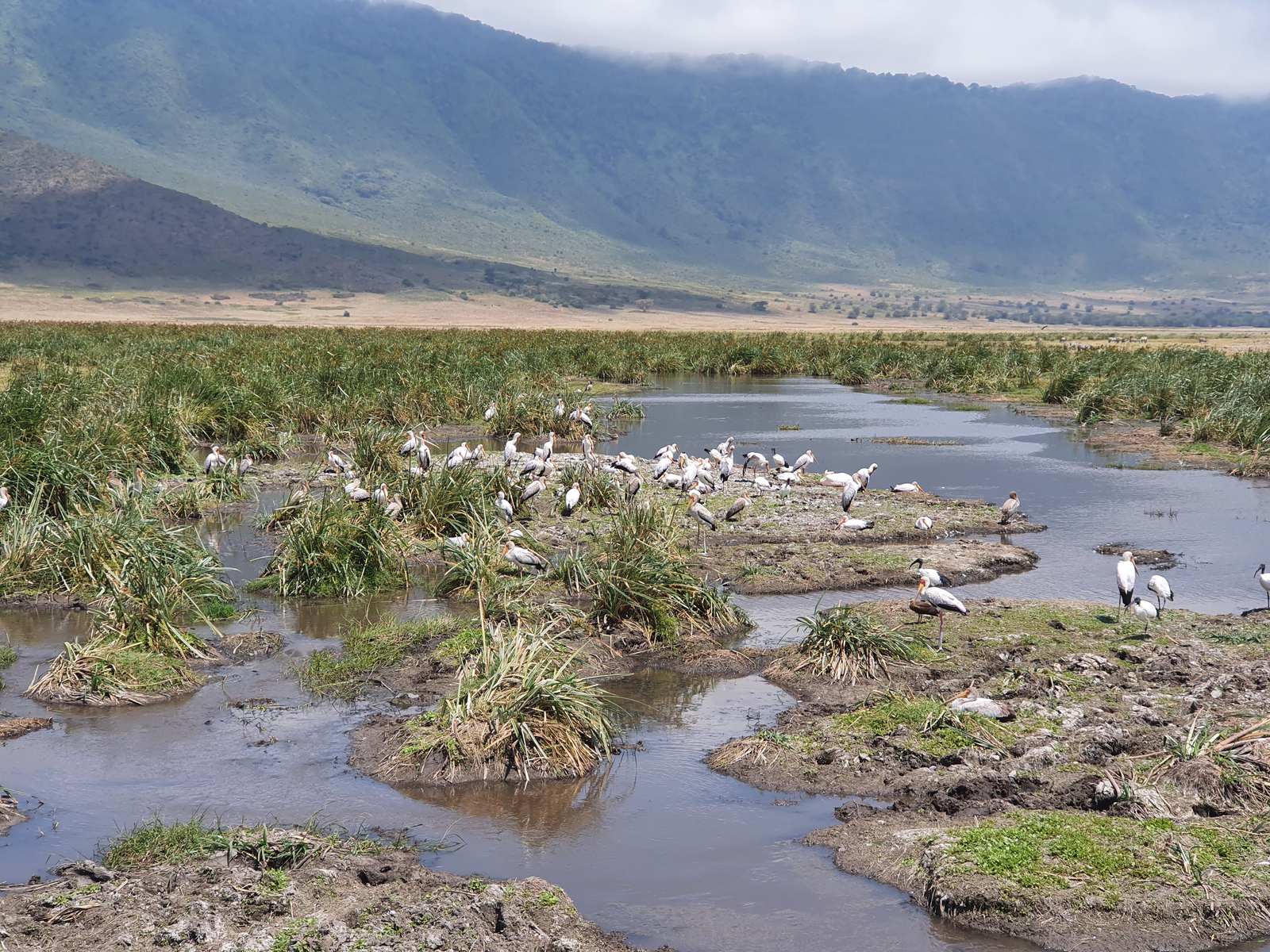
The greater flamingo (Phoenicopterus roseus) is also present at Lake Natron, though in far smaller numbers. It is larger and paler than the lesser flamingo, pinkish-white rather than deep pink, and can be distinguished at a distance by its larger body size and slower, more deliberate gait.
Ol Doinyo Lengai: the world’s only carbonatite volcano
Ol Doinyo Lengai rises from the southern shore of Lake Natron to 2,878 metres (9,442 feet), a near-perfect volcanic cone that the Maasai call “Mountain of God.” It is the only active volcano on Earth known to erupt natrocarbonatite lava.
Natrocarbonatite lava is chemically unlike any other lava on the planet. Where basaltic lava erupts at temperatures above 1,100°C, natrocarbonatite lava from Ol Doinyo Lengai erupts at about 510°C (950°F), roughly half as hot. It contains at least 50% carbonate minerals by weight and is enriched in sodium and potassium rather than silicon.
The volcano and the lake belong together. Volcanic activity in the Rift Valley, including nearby Ol Doinyo Lengai, feeds alkali-rich minerals into the basin, which helps explain why Lake Natron is so alkaline.
Lengai is climbable, and increasingly popular with adventurous travellers. The standard route starts around 1:00 a.m. as a night ascent, aiming to reach the summit for sunrise over the Rift Valley. The full round trip takes roughly 8 to 12 hours. The climb is steep and demanding. You need a registered Maasai guide (independent climbing is not permitted), and the drive from accommodation at Engaresero to the trailhead takes 30 to 60 minutes.
The crater is a live volcanic environment. At times of elevated activity, the summit is off-limits or extremely hazardous. Recorded eruptions date back to 1880, and the volcano is classed as active. Always check current volcanic activity with your guide or operator before planning the climb.
A summit sunrise, when the crater is open, looks out over the Rift Valley floor with Lake Natron below.
Engare Sero and prehistoric human footprints
On the southern shore of Lake Natron, near the village of Engaresero (also spelled Ngare Sero), a series of ancient human footprints are preserved in hardened volcanic ash from Ol Doinyo Lengai’s eruptions. The prints capture feet in motion, and the site gives a rare glimpse of people going about daily life beside a Rift Valley lake.
The site can be visited from accommodation at Engaresero. Ask your camp or operator to arrange a local guide, and do not walk over the prints.
The Maasai and the sacred volcano
The land around Lake Natron is Maasai pastoral territory. The Maasai, an Eastern Nilotic ethnic group native to northern Tanzania and Kenya, have lived in this region for centuries, and they regard Ol Doinyo Lengai as a sacred mountain. “Mountain of God” is a direct translation of the Maasai name, and the volcano features in Maasai cosmology as the home of Enkai, the Maasai deity.
Visiting Lake Natron means visiting Maasai pastoral land. The village of Engaresero, the gateway to both Lake Natron and the Ol Doinyo Lengai climb, is a Maasai community. Responsible tourism here means booking through operators who work directly with local Maasai guides, paying community fees, and remembering that the volcanic landscape is someone’s home and sacred site.
The cattle herds you will see on the drive in belong to working pastoral land, and the Maasai relationship with it long predates tourism. A Maasai guide for Ol Doinyo Lengai is not just a permit requirement. It is the right way to engage with a mountain the community considers sacred.
Safari practicalities
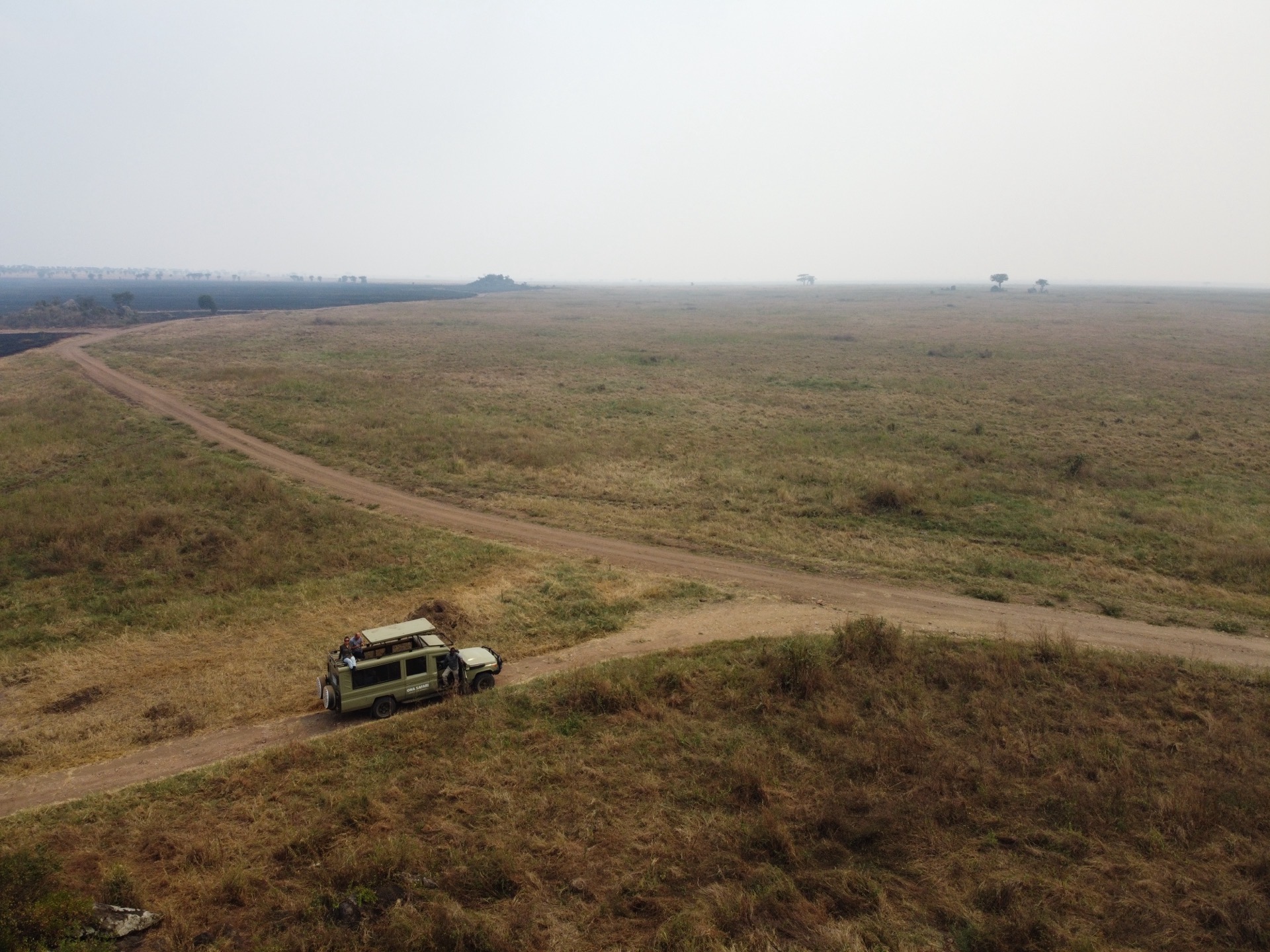
Getting there: Tour operators in Arusha and Moshi offer Lake Natron as a 1–2 day excursion; longer combinations include the Ol Doinyo Lengai climb and multiple nights. The road to Lake Natron is partially paved and partially unpaved; a 4WD vehicle is required for the last section. Arusha to Lake Natron is about a 6-hour drive, so a day trip leaves very little time at the lake; plan for 2 nights minimum if you want to climb Lengai or spend meaningful time with the flamingos.
Permits and fees: Lake Natron is within a Wildlife Management Area. Visiting requires a WMA permit, obtainable at Engaresero. The one-time gate fee is approximately US$29.50 per person; additional park and conservation fees of around US$35 may apply. Fees can change, so confirm current rates with your operator before arrival.
Accommodation: Options are limited. Lake Natron Camp is the best-known dedicated property, operating as an ecological camp in a dramatic Rift Valley location. The camp reports over 100 bird species in the surrounding area. Other camps and campsites are available near Engaresero. This is a remote destination, and accommodation reflects that.
Best season: Late May to early November (dry season) is the recommended window. August to October is when lesser flamingos gather in largest numbers, amassing on the caustic flats to lay their eggs. The dry season also delivers the clearest light and most dramatic colour contrasts on the lake.
Combining with the northern circuit: Lake Natron makes a natural 2-night addition to any northern circuit itinerary. It pairs most easily with Ngorongoro (the route drops from the crater rim to the Rift Valley floor) and Lake Manyara (4–5 hours from Lake Natron). See the Northern Circuit sequence guide for how to build a complete itinerary.
Photography at Lake Natron
Lake Natron rewards preparation. The colours are most vivid in the hour after dawn and the hour before sunset. The red-orange water, the white salt crust, and the black volcanic cone of Lengai behind it create a palette that looks post-processed even straight out of the camera.
For flamingos, you need reach. The main feeding and nesting areas are often hundreds of metres from shore. A 400mm lens is useful for frame-filling shots; a 200mm lens captures the spectacle of scale. The best flamingo images come from low angles, sitting or kneeling at the shoreline, rather than from standing height. Flamingos are most active and most concentrated at dawn.
Ol Doinyo Lengai from the summit offers the widest possible vista: the Rift Valley floor, the lake, and the horizon stretching into Kenya. A wide-angle lens (16–24mm) captures the scale; a telephoto picks out flamingo flocks on the lake surface below. The pre-dawn light ascending the volcano is completely dark, so bring a good headtorch.
For the Engare Sero footprints, close-focus macro lenses capture the detail of individual prints; a wider lens with a low angle shows the tracks in the context of the surrounding ash.
For the wider northern Tanzania context, including how Lake Natron fits into a 7- to 14-day northern circuit itinerary, see the complete northern circuit itinerary. For Ngorongoro Crater (the most natural gateway destination before or after Lake Natron), see the crater planning guide. Tanzania’s full birdwatching landscape, from Natron’s flamingos to Tarangire’s raptors and the Pemba scops owl, is mapped in the Tanzania birdwatching guide. For fees across all of Tanzania’s national parks and conservation areas, see Tanzania park fees.
Frequently asked questions
Where can I see flamingos in Tanzania?
Lake Natron in northern Tanzania is the primary flamingo destination. It is the world's largest lesser flamingo breeding site, sustaining 1.5 to 2.5 million birds, roughly 75% of the global lesser flamingo population. Since 1962, Lake Natron has been the only site in East Africa where large-scale lesser flamingo breeding is known to occur reliably. Secondary viewing: Lake Manyara (lesser and greater flamingos visible at the lakeside, best wet season), Lake Magadi inside Ngorongoro Crater (hundreds to thousands of lesser flamingos), and Momella Lakes in Arusha National Park. Lake Natron is Tanzania's main flamingo destination by a large margin.
Why do flamingos nest at Lake Natron?
The extreme alkalinity of Lake Natron (pH around 10.5) deters most predators, which helps make it a safe place for flamingos to breed. Flamingos build mud-cone nests on these flats, out of reach of predators. The same cyanobacteria that thrive in the alkaline water are the flamingos' primary food source; the carotenoid pigments in the cyanobacteria give flamingos their characteristic pink colour. Take away the alkalinity and you remove both the protection and the food.
Can you climb Ol Doinyo Lengai?
Yes, Ol Doinyo Lengai is climbable and increasingly popular as an adventure add-on to a Lake Natron visit. The standard route is a night ascent starting around 1:00 a.m. to reach the summit (2,878 m) for sunrise. The full hike takes roughly 8 to 12 hours round trip. It is steep and demanding. A registered Maasai guide is required; independent climbing is not permitted. Bring warm layers (the summit is cold before dawn), good footwear, and plenty of water. Lengai is an active volcano: the crater zone is a live volcanic environment, and access can be restricted during periods of elevated activity. Check current conditions with your guide or operator before you go.
Is Lake Natron worth visiting?
Yes, for the right traveller. Lake Natron is not the easiest destination in Tanzania (a 1–2 day tour from Arusha, partially unpaved roads, limited accommodation) but it is extraordinary. The alkaline landscape, the flamingo spectacle, Ol Doinyo Lengai, and the Engare Sero human footprints, preserved in volcanic ash near the lakeshore, combine to make this one of the most unusual destinations in East Africa. The lake pairs well with a Ngorongoro Crater visit. If a breeding event is active when you visit, with up to 2.5 million flamingos covering the flats, the sight is unmatched anywhere in Africa.
What is the best time to see flamingos at Lake Natron?
Late May to early November (dry season) is best: lower lake levels concentrate flamingos, aerial photography conditions are clearer, and the volcanic landscape is vivid without haze. The main flamingo gathering at Lake Natron typically runs from August through October, when lesser flamingos amass to lay eggs. Flamingo breeding at Lake Natron is not annual: lesser flamingos skip breeding during unfavourable conditions. Outside active breeding years, large flocks still feed at the lake year-round. Check recent reports or ask your operator before going: an active breeding event transforms the visit from significant to extraordinary.
How do I get to Lake Natron from Arusha?
Tour operators offer Lake Natron as a 1–2 day excursion from Arusha or Moshi, usually combining it with the Ol Doinyo Lengai climb. The drive from Arusha takes roughly 6 hours depending on road conditions, on partially paved and unpaved roads. A 4WD vehicle is required for the final section. Visiting Lake Natron requires a Wildlife Management Area permit, obtainable at Engaresero, the gateway village; the one-time gate fee is around US$29.50 per person. There is no reliable public transport to Lake Natron; you need a private vehicle or an organised tour from Arusha.
Sources and last verified
- BirdLife International: Lake Natron as East Africa's only regular lesser flamingo breeding site; soda ash project halted in 2025.
- Smithsonian Global Volcanism Program: Ol Doinyo Lengai: Ol Doinyo Lengai as an active volcano with natrocarbonatite lava.
- Encyclopaedia Britannica: Oldoinyo Lengai: Elevation and location of Ol Doinyo Lengai near Lake Natron.
.