
Facts & prices checked: 2026-10-15
Tanzania is a better solo female travel destination than the internet tends to suggest. The gap between the “is it safe?” anxiety before arriving and the experience on the ground is large, in the right direction. That said, the details matter. Here is the practical picture, written from Zanzibar’s east coast, where I have lived since 2011.
The overview
Tanzania is moderately safe for solo female travelers by African standards. The risks are predominantly low-level: persistent harassment in tourist areas, opportunistic petty theft, and poor transport at night. Violent crime against tourists is uncommon. The UK FCDO advises against travel only within 20 km of the Tanzania–Mozambique border (Cabo Delgado spillover zone). No restrictions apply to Zanzibar, the northern safari circuit, or the main tourist regions.
The US Department of State raised mainland Tanzania to Level 3 (“Reconsider Travel”) on 31 October 2025, citing terrorism risk near the Mtwara region (spillover from the Cabo Delgado insurgency across the Mozambique border, far from Zanzibar), violent post-election unrest in Dar es Salaam, and LGBTQ+ targeting risks. Zanzibar, which has its own government and security environment, is generally considered lower risk than this rating implies for its specific areas.
What determines the quality of a solo female trip to Tanzania is not violent crime. It is calibration. Knowing the dress code, understanding how Stone Town harassment works, choosing accommodation wisely, and booking transfers in advance turn a potentially anxious experience into an overwhelmingly positive one.
Disclosure: I manage Boutique Hotel Matlai on Zanzibar’s east coast. Tanzania is worth it for solo women; the preparation just needs to be right.
Safaris: the most structured environment
Safari camps and lodges are, counter-intuitively, among the most controlled and secure travel environments in Tanzania. This is particularly good news for solo female travelers.
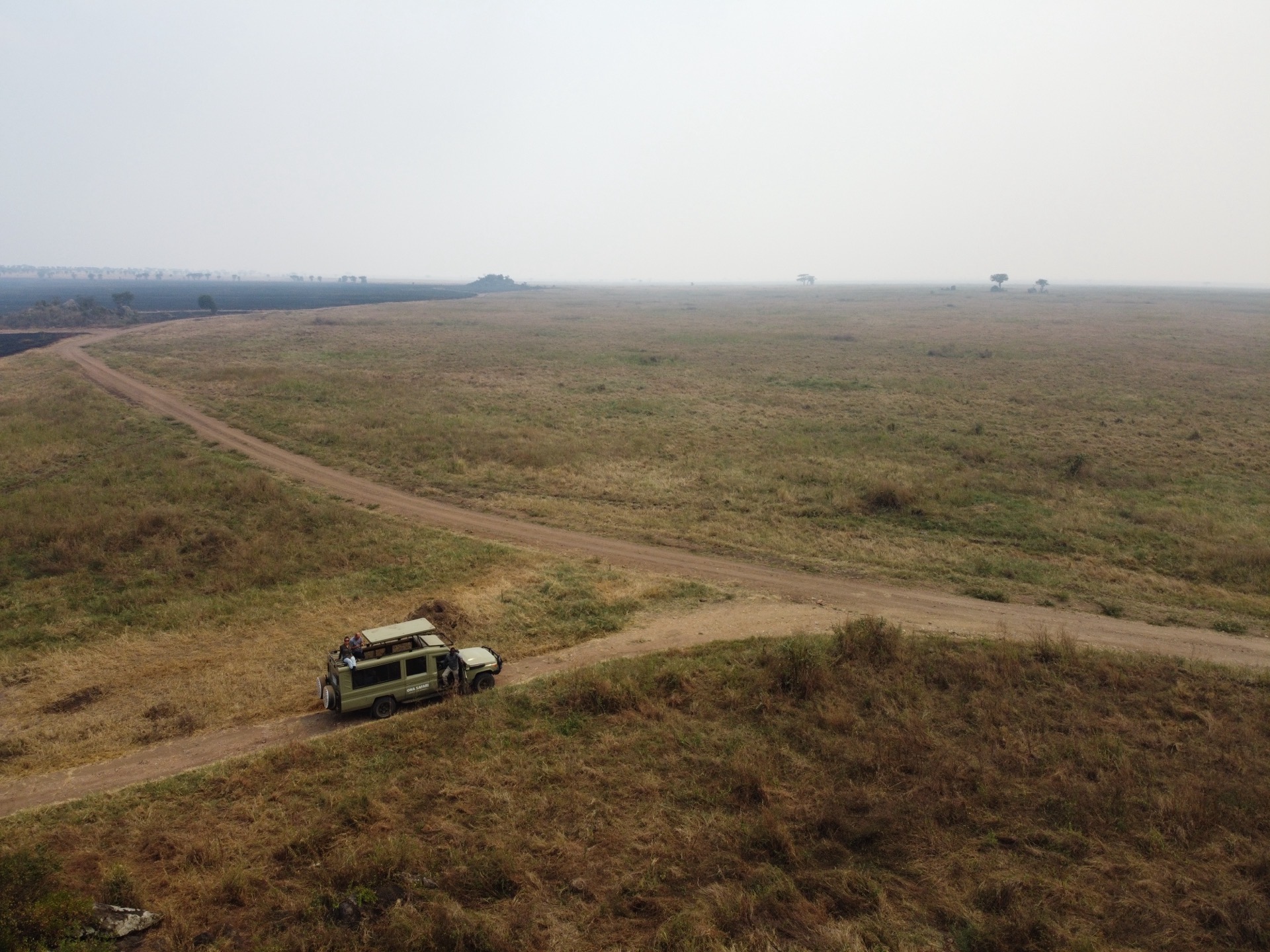
The structure: You’re in a Land Cruiser with a guide for game drives, so most of your time on safari is spent in the vehicle. Lodge and camp perimeters are fenced and staffed 24 hours. You walk between your tent and the dining area via lit paths with camp staff available. There is no walking alone in the bush; the guide is always with you or within the camp structure.
The social dynamic: Camps mix guests naturally at dinner, at the campfire, and on shared game drives. A solo woman at a shared dinner table usually finds company easily, and seeing wildlife together gives everyone something to talk about.
What to watch for: The main risk on safari is not personal safety. It is booking with a poor operator or guide. A bad guide ruins the experience entirely. Book through a vetted operator, read recent reviews that mention specific guides by name, and choose camps with a strong staffing reputation.
Single supplement reality: Most safari lodges charge a single supplement over the per-person sharing rate for solo occupation, and the size varies by lodge and season of a tent or room. This is the main practical frustration of solo safari travel. Options: book a group safari from Arusha (share vehicle and itinerary, and ask whether a supplement applies), ask operators directly about low-season single rates, or factor the supplement into the budget from the start.
Stone Town: the main challenge
Stone Town is one of East Africa’s great walking destinations, a UNESCO World Heritage labyrinth of carved Omani doors, Persian baths, and the old slave market. It is also the part of Tanzania that requires the most active management for solo female travelers.
What the challenge is: Persistent touts, guides, and shop owners approach solo travelers constantly in the narrow alleys, offers of “free tours,” directions to shops, questions about your hotel. The pattern is relentless on the first day. It is almost never threatening. It is a business tactic by people competing for tourist income in a concentrated market. Understanding this frames it correctly: an annoyance to manage, not a danger to fear.
What works: A firm, direct “no thank you” without stopping or making extended eye contact. Don’t explain, don’t engage, don’t apologise. A long explanation gives the interaction time to develop. Walking with purpose, even when you are lost, reduces the number of approaches. After one day in Stone Town, most solo travelers have calibrated their responses and the experience becomes significantly easier.
Safety by time of day: Stone Town is safe during the day throughout the main tourist areas, the Forodhani seafront, the route between the Old Fort and the Anglican Cathedral, the main market area. Evenings at Forodhani Gardens market (open from approximately 18:00 to 21:00) are busy and comfortable. The deeper alleys behind the main souk, away from the seafront, are quieter after dark and best avoided alone at night. Stick to the lit, populated routes you know. A taxi from your guesthouse for late-night returns is a sensible precaution, not an overreaction.
Petty theft: More common than confrontation in Stone Town. Keep your phone in a pocket rather than in your hand. Don’t carry all your cash. A bag worn across the body rather than over one shoulder reduces snatch risk.
Zanzibar beach areas
The beach zones of Zanzibar operate under a completely different social logic to Stone Town, and for most solo female travelers they are the highlight of the trip.
North coast (Nungwi and Kendwa): The most developed part of Zanzibar tourism, international resort atmosphere, bar scene, reliable swimming at virtually all tides (deep water to the reef from shore). The north coast is socially accessible: there is an evening scene, dive center communities, and the Full Moon Beach Party at Kendwa. The environment in resort areas is relaxed and normal beachwear is appropriate on the beach.
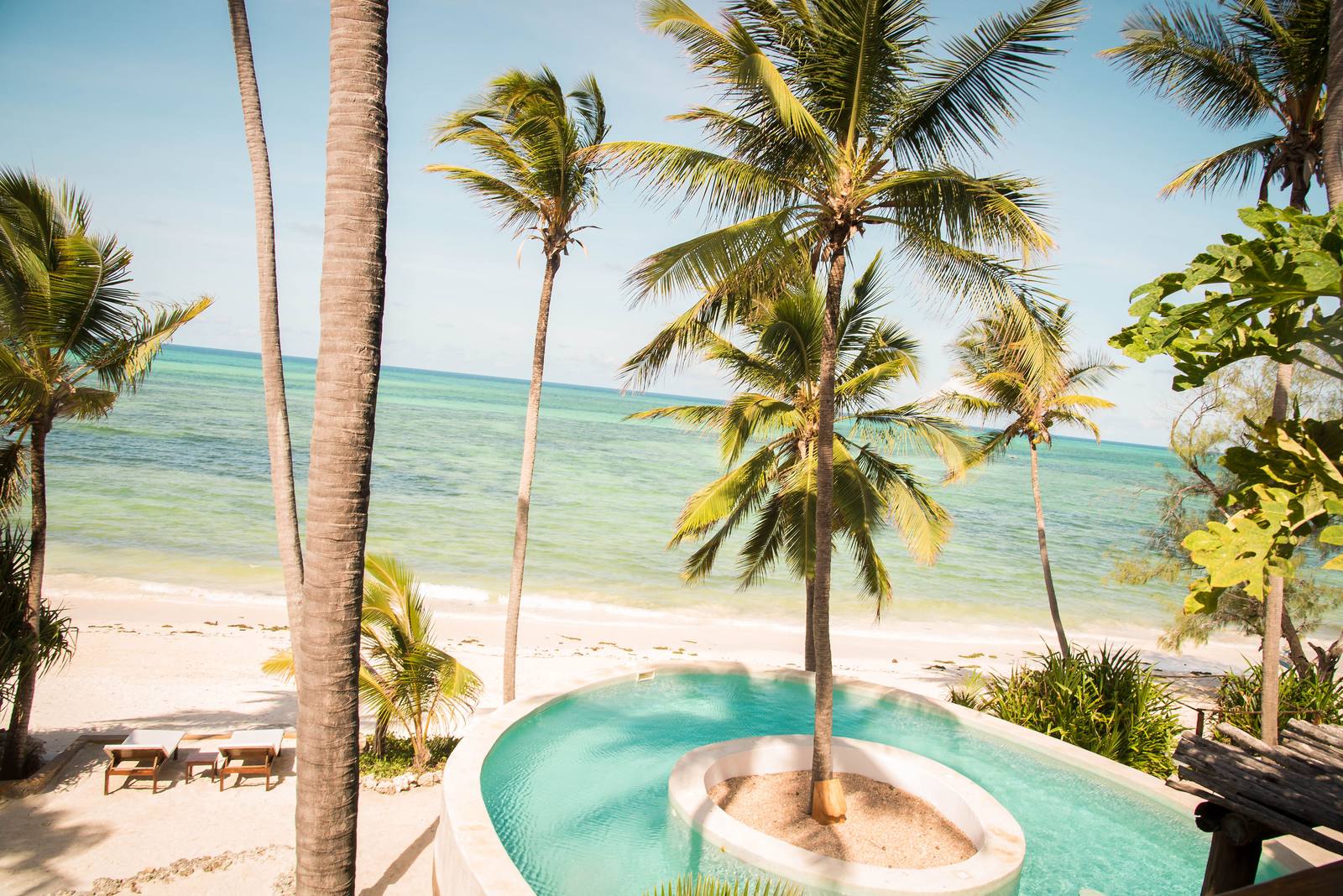
East coast (Paje, Jambiani, Michamvi): The pace is slower. Some smaller guesthouses serve dinner communally, with one shared table and all guests together, so meeting other travelers happens naturally. Paje is the island’s kite-surfing hub, with the most active solo travel scene (kite schools, beach bars). Jambiani is quieter and more community-oriented. Michamvi is the most peaceful of the three.
Small guesthouses on the east coast are a comfortable solo travel setting: social without requiring effort.
Dress code: when and where
The dress code on Zanzibar is practical guidance, not symbolic compliance. Zanzibar is about 99% Muslim and Islamic culture shapes daily social norms in a direct and visible way.
Zone 1, Beach and resort areas: Normal beach attire. Bikinis at the pool and on the beach are entirely fine and expected. No adjustments needed within a resort perimeter.
Zone 2, Stone Town, local villages, markets, any area away from a resort beach: Shoulders and knees covered. Both men and women. A lightweight long shirt or linen dress and loose trousers handle this for the entire trip. A sarong or wrap worn over a swimsuit covers the transition from beach to town. It takes thirty seconds and changes the experience noticeably. The rule applies equally in east coast fishing villages if you walk from your guesthouse into the settlement.
Practical packing: One long-sleeved lightweight layer and one pair of loose, light trousers covers every dress-code situation in Tanzania. Keep them in your daypack on any day that involves Stone Town or a mainland town.
The same general principle applies in Arusha and on the mainland, though enforcement is less visible and the social pressure is lower than in Stone Town’s concentrated environment.
Transport and night safety
Transport choices are where solo female travel risk in Tanzania is most practically managed.
Pre-book transfers: Do not take unbooked taxis from dark streets, car parks, or the arrival zones at the ferry terminal at night. Book transfers through your accommodation, the driver is vetted, the rate is agreed, and there is accountability. The UK Foreign Office advises arranging taxis through a hotel or travel operator and asking to see the driver’s ID.
Dalla-dallas (shared minibuses): Usable for solo travel by day, cheap, adventurous, and fine for routes like Stone Town to Paje or the east coast. Ask at the terminal which number goes to your destination. Not recommended for solo travel at night.
Avoid rides from strangers: Canada’s official travel advice warns against accepting rides from strangers and hailing taxis on the street, which is sensible for solo travelers. Book your own cab, negotiate the rate before getting in (no meters in Zanzibar), and use your guesthouse’s recommended driver when in doubt.
Internal flights: The better option for solo female travelers making longer journeys, Arusha to Zanzibar, connections within the Serengeti circuit. Several domestic airlines operate these routes; check current schedules. Flying removes the night transport exposure entirely and is strongly preferable to overnight road journeys on unfamiliar routes.
Boda-boda (motorcycle taxis): Avoid. Motorcycle taxis are strongly associated with road crashes in Tanzania, and many riders have no licence or insurance. The road risk is not worth it.
Meeting other travelers
Tanzania is easier to meet people in than its reputation suggests, and the structure of the country makes social connection natural.
Safari camps: The most effortless social environment on the trip. Shared game drives, communal campfire evenings, and small group sizes (most camps host 10–20 guests) produce friendships quickly. A solo woman at a safari camp is immediately integrated, the shared experience of wildlife is the conversation starter that removes all the usual awkwardness.
East coast guesthouses: Communal dinner tables are the social infrastructure at some places. Ask specifically whether communal dining is available when booking solo on the east coast. Guesthouses in Paje, Jambiani, and Michamvi that offer this format make it easy to meet people, which is harder in large hotels.
Stone Town coffee and café spots: Zanzibar Coffee House (coffee), Lukmaan (local Zanzibari lunches at low prices), and the rooftop at Emerson Spice (evenings and views) are all possible spots for solo travelers who want social contact without committing to a tour or activity.
Paje kite schools: Multi-day beginner courses run alongside other learners. The international kitesurfing crowd is young, social, and travel-minded. If meeting people is a priority on Zanzibar, Paje kite beach is the most efficient way to do it.
Health and practical safety
Malaria: Official UK travel-health guidance (TravelHealthPro) lists a malaria risk in all areas of Tanzania below 1,800 metres, including Zanzibar. Talk to a doctor or travel clinic about prophylaxis well before you leave; the options they recommend include atovaquone/proguanil (Malarone, started 1–2 days before arrival and continued for 7 days after leaving the risk area) and doxycycline. Use a mosquito net and repellent. Malaria is the health risk with the most impact on solo travelers who fall ill without a companion to help coordinate treatment.
Petty theft: Keep valuables low-profile. Phone in a pocket, not in your hand. Don’t carry all your cash in one place. Use the room safe for your passport and bank cards. At the beach, take only what you need for the day. Petty theft in Tanzania is opportunistic, not targeted.
Travel insurance: Two separate products apply. The mandatory inbound insurance (USD 44 per adult) is a statutory entry requirement: ZIC if Zanzibar is your first stop (since October 2024, buy at inbound.visitzanzibar.go.tz), NIC if you land on the mainland first. ZIC covers approximately USD 50,000 medical and is not comprehensive health insurance. Your own travel health insurance covers the rest. For solo travelers, comprehensive cover is especially important, you’re managing a medical situation without a travel companion. NIC is sold at inbound.nicinsurance.co.tz or at the border and has applied on the mainland since 1 October 2026. If you land in Dar, Kilimanjaro or Arusha you need NIC (EAC and SADC nationals are exempt on the mainland), and the same policy is valid for your Zanzibar leg: one policy per journey.
AMREF Flying Doctors: The AMREF Flying Doctors medevac plan has a regional rate that covers Tanzania including Zanzibar; published rates have been around USD 45 per person for up to 14 days and USD 60 for up to 2 months, so check the current price with AMREF. For solo travelers, this is worth the cost. You want evacuation organised without depending on someone else to advocate for you.
Emergency numbers: 112 is the general emergency number in Tanzania. Save your travel insurer’s emergency line and the AMREF 24-hour helpline before you leave. Keep a photograph of your passport in cloud storage, separate from your phone.
LGBTQ+ note
This is important context that any LGBTQ+ traveler deserves to have plainly.
Tanzania (mainland) criminalises same-sex sexual relationships. The Penal Code carries penalties ranging from 5 years (gross indecency) to 30 years to life (unnatural offense), depending on the offense charged rather than gender. Zanzibar has a separate legal framework: same-sex activity between men falls under “unnatural offences,” carrying up to 14 years, while same-sex acts between women fall under a separately named “acts of lesbianism” provision, carrying up to 5 years imprisonment or a TSh 500,000 fine.
The U.S. State Department specifically advises LGBTQ+ travelers to reconsider travel to Tanzania and warns against public displays of affection between same-sex couples. The criminalisation framework creates real legal risk in any incident.
For solo LGBTQ+ travelers who travel completely discretely (no public affection, no declaration of relationship status) risk is lower but not absent. The legal framework creates danger if any complaint or incident arises.
Tanzania is not a safe destination for open LGBTQ+ travel and should not be described as welcoming for that community. This is a practical safety assessment based on the legal situation.
What to read next
- Zanzibar solo travel guide, the Zanzibar-specific guide: Stone Town navigation, east coast bases, transport, ZIC insurance, meeting people
- Tanzania health guide, malaria, vaccinations, medical facilities, travel insurance requirements for the mainland
- Zanzibar health guide, ZIC mandatory insurance, malaria prophylaxis, Zanzibar-specific medical cover
- what safaris cost solo, what safaris cost, including single supplement realities
- Safari preparation guide, what to pack, what to expect, how to choose an operator
- the eVisa and ZIC process, eVisa, ZIC, airport process, what to prepare before you fly
- All Tanzania guides
Frequently asked questions
Is Tanzania safe for solo female travelers?
Moderately safe by African standards. The risks are predominantly low-level: persistent harassment in tourist areas (touts in Stone Town, beach sellers on the north coast), opportunistic petty theft, and poor transport at night. Violent crime against tourists is uncommon. Safaris are particularly safe for solo female travelers, you're in a structured environment with a guide, lodge, and other guests. The east coast of Zanzibar is relaxed for solo travelers and its guesthouses tend to be social. The main caveat: Stone Town requires dress awareness and firm boundary-setting with touts, and Tanzania is not a safe destination for LGBTQ+ travelers.
What should solo female travelers wear in Zanzibar?
Two environments, two standards. At the beach and in resort areas: normal beachwear is completely fine. In Stone Town, local villages, markets, and anywhere off the resort or beach: cover shoulders and knees. A light linen or cotton wrap, loose trousers, or a long skirt is ideal, practical in the heat and respectful to the conservative Muslim environment. The same applies in mainland Tanzania contexts, though dress enforcement is less visible on the mainland than in Stone Town. Dressing respectfully signals that you understand and respect the local context, which substantially reduces harassment.
Is the safari environment safe for solo female travelers?
Yes, safari camps and lodges are among the safest travel environments in Tanzania. Camps are fenced, staffed, and oriented around group experiences. You're with a guide for game drives; you walk between tent and dining room via lit paths; fellow guests naturally interact at dinner. Camps are built around shared meals and shared game drives, which makes it easy to meet other guests. The single supplement charge is the main practical annoyance, not safety.
How do I handle harassment in Stone Town as a solo woman?
The harassment in Stone Town is persistent and can feel relentless on a first visit: constant offers of 'free tours,' invitations to shops, questions about where you're staying. It is almost never threatening, it's a business tactic by people competing for tourist attention in a crowded market. What works: a firm, direct 'no thank you' without stopping. Eye contact optional. Don't explain, don't engage, don't apologise. Responding with a long explanation gives the interaction more time to develop. Walking with purpose, even if you're lost, reduces approaches. It gets significantly easier after a day once you've calibrated your responses and recognise the pattern.
What is the LGBTQ+ situation for travelers in Tanzania?
Tanzania (mainland) criminalises same-sex relationships, the Penal Code carries penalties ranging from 5 years (gross indecency) to 30 years to life (unnatural offense), depending on the offense charged rather than gender. Zanzibar has a separate legal framework: 'unnatural offences,' the provision primarily applied to men, carries up to 14 years; 'acts of lesbianism' carry up to 5 years imprisonment or a fine (up to TSh 500,000 according to the Human Dignity Trust). The U.S. State Department specifically advises LGBTQ+ travelers to reconsider travel to Tanzania and to avoid public displays of affection between same-sex couples. Tanzania is not a safe destination for open LGBTQ+ travel, and it should not be described as welcoming for that community.
What is the single supplement situation at Tanzania safari lodges?
Most safari lodges and camps charge a single supplement on top of the per-person sharing rate, and the size varies by lodge and season. This is one of the most common frustrations of solo safari travel in Tanzania. Options to manage it: book a group safari from Arusha (share a vehicle and itinerary with other travelers, and ask whether a single supplement applies); ask specifically about solo rates when booking (some properties reduce or waive the supplement in low and shoulder seasons); or budget for it in advance. The supplement is real but Tanzania is already expensive enough that it's worth factoring into your trip budget rather than letting it derail a booking decision.
Sources and last verified
- UK FCDO: Tanzania safety and security: 20 km Mozambique border zone, taxi advice (arrange through hotel or operator)
- UK FCDO: Tanzania entry requirements: Insurance is needed only for the first port of entry, mainland or Zanzibar.
- Canada: Tanzania travel advice: Advice against rides from strangers and hailing taxis on the street.
- AMREF Flying Doctors: Medical evacuation plans for Tanzania and Zanzibar (check current rates)
.