
Facts & prices checked: 2026-10-10
Tanzania is not a difficult country to travel in, but it demands better travel insurance than most European or Southeast Asian destinations. The reason is specific: remote geography, not crime. A medical emergency in the Serengeti puts you hours from a functioning hospital, and an air evacuation without cover can be a very large bill. This guide covers what Tanzania travel insurance needs to include, what AMREF Flying Doctors is and why it matters, what ZIC insurance does (and does not) cover, and the specific coverage gaps for divers and Kilimanjaro climbers.
Why Tanzania needs better insurance than most destinations
Standard travel insurance is designed around accessible destinations, where a hospital is a taxi ride away and emergency services are fast. Tanzania works differently in one crucial way: the parks where you spend most of your time are remote.
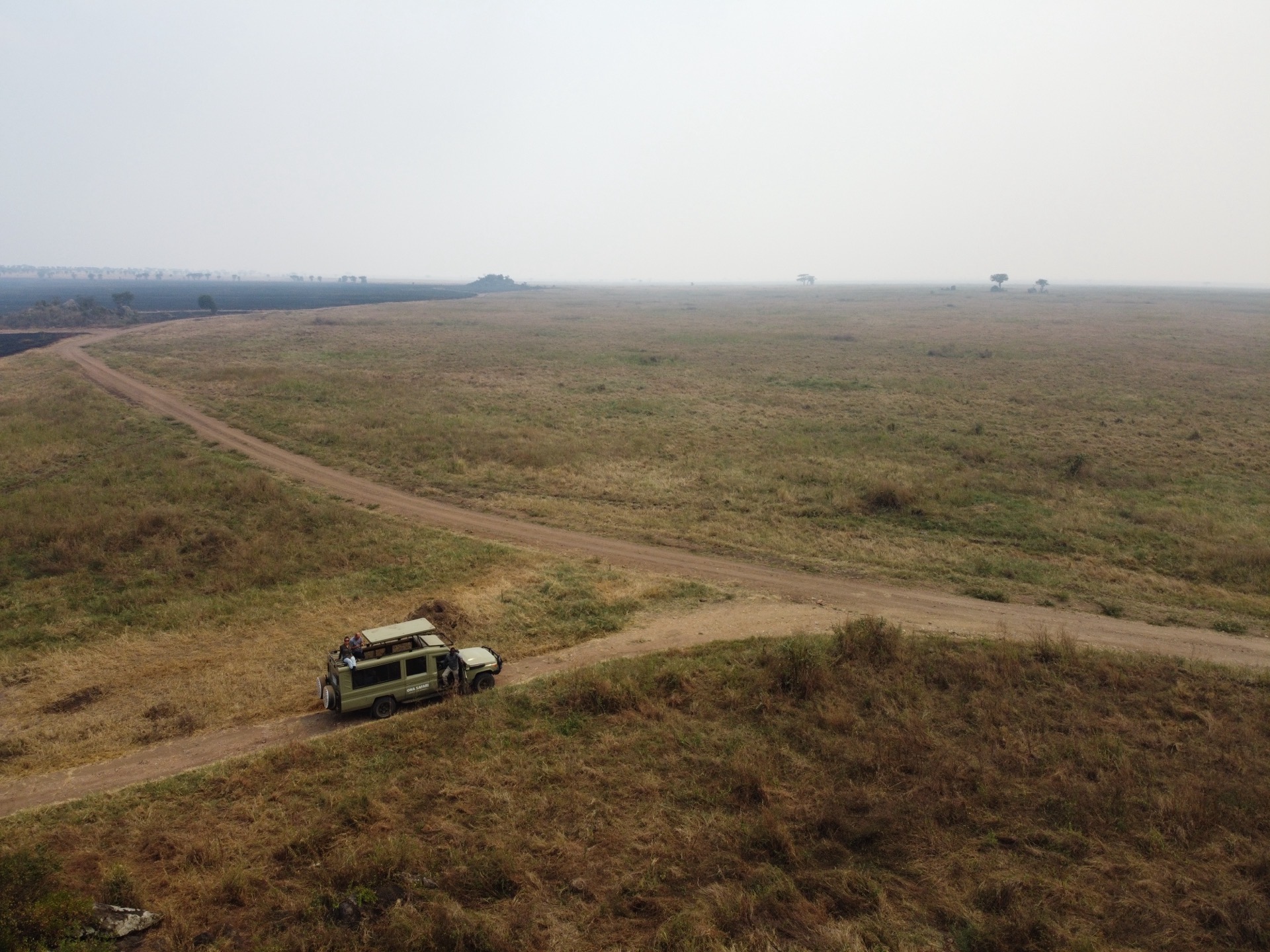
The Ndutu area of the southern Serengeti, where the Great Migration calves between January and March, is about 261 km from Arusha by road (roughly 5.5 hours according to one source), and Arusha has the nearest medical facility of any quality in the north. Ruaha, the great southern circuit park, is a bush flight away from Dar es Salaam. Selous/Nyerere is accessible only by light aircraft or a long drive. At all of these locations, camp first aid is the immediate response to any medical event. Everything beyond first aid requires evacuation.
This matters for insurance in three ways:
-
Medical evacuation is the biggest risk, not the treatment. Moving a patient from a remote Tanzanian park to a major hospital in Nairobi or Dar es Salaam by air is expensive, and serious cases are often transferred again afterwards. For scale, one guide puts a Kilimanjaro helicopter evacuation alone at USD 3,000 to USD 10,000 or more, and total costs with a hospital stay above USD 10,000. A major insurer recommends at least USD 250,000 of medical evacuation cover for Tanzania trips.
-
Tanzania does not have walk-in travel clinics at every corner. Dengue, malaria, and tropical infections may require specialist treatment at facilities that are hours away. Knowing your nearest medical resource before you need it matters, as does having a policy that covers the cost of getting there.
-
Three trip types have specific additional requirements: safari travelers need an evacuation membership such as AMREF; scuba divers need a diving add-on; Kilimanjaro climbers need an altitude clause. Standard policies often fail on all three.
For insurance, Africa cannot be treated like a European trip. Ask where the nearest serious facility is for every stop on your itinerary, and ask your operator how an evacuation from that camp would work.
AMREF Flying Doctors: the most important thing no one mentions
AMREF Flying Doctors (African Medical Research Foundation) operates emergency air evacuation across East Africa, with air evacuation services running 24 hours a day and a 24-hour medical helpline. For independent travelers, a short-term membership is one of the best-value safety nets available.
Costs (as of 2026, per the Flying Doctors Society of Africa membership page):
- USD 15 per person for 14 days / USD 25 for 2 months: Kenya only
- USD 30 per person for 14 days / USD 50 for 2 months: Extended Regional rate, covering Kenya, Uganda, Tanzania, Rwanda, Zanzibar and Burundi
For a typical Tanzania + Zanzibar trip covering the Serengeti and the coast, the Extended Regional rate at USD 30/14 days is the plan that fits. The Kenya-only tier does not cover Tanzania.
What AMREF is for:
- Emergency air evacuation from the coverage area to the nearest appropriate hospital
- A 24-hour medical helpline for advice and coordination
- Coordination of the evacuation logistics
What AMREF is not: a substitute for travel insurance. It is an evacuation membership, so treatment costs at the receiving hospital, trip cancellation, delays and lost luggage need to be covered elsewhere. Read the current membership terms for exclusions such as pre-existing conditions.
This is why AMREF is complementary to travel insurance. AMREF handles the flight; your travel insurance handles the rest. Together they close a gap that neither handles well alone.
When to buy: Use the official membership page and check the current purchase and start-date rules before you travel. If your safari operator includes an AMREF membership in their package, confirm this in writing before departure.
What to look for in a Tanzania travel insurance policy
Five things to check beyond the headline price:
1. Medical evacuation limit
Look for a high limit. One major insurer recommends at least USD 250,000 of medical evacuation cover for Tanzania trips. Evacuation from a remote Tanzanian park to a major hospital, followed by repatriation home with a medical escort, can add up to a very large total, so a low cap is likely to leave you with an uncovered balance.
Read the wording carefully: “emergency medical evacuation” and “hospital-to-hospital transfer” are different. You want both.
2. Medical treatment coverage
The same insurer recommends at least USD 100,000 of emergency medical cover for Tanzania. Serious malaria, snakebite, or traumatic injury may require extended intensive care in a private facility in Nairobi or Cape Town, which is costly.
3. Activities coverage
Tanzania’s activities (game drives, walking safaris, snorkeling, boat trips) may or may not be covered under a standard policy. Check specifically that:
- Safari game drives in national parks are included (occasionally classified as “adventure” activities)
- Any watersports you plan (snorkeling, kayaking) are covered
- Scuba diving, if you dive, is explicitly included (see next section)
4. Trip cancellation and curtailment
Flight disruptions happen, and safari operators in Tanzania are generally small businesses. If a specialist operator fails, you want some cancellation cover. Look specifically for tour operator/supplier failure coverage if your itinerary is heavily prepaid.
5. Pre-existing conditions
Declare everything. Undeclared pre-existing conditions are a common reason for claim denial. Tanzania’s remote medical care environment makes pre-existing cardiac, respiratory, or metabolic conditions a higher risk. If you have one, ensure your policy covers it explicitly, and carry enough medication for your entire trip plus a buffer.
Scuba diving coverage: a different policy
If you plan to dive in Zanzibar, check your insurance policy word by word, not just the headline. DAN Southern Africa says the best dive sites around Zanzibar are in the north around Nungwi and in the northeast.
The core problem: Many standard travel insurance policies exclude scuba diving, or limit coverage to recreational diving to a specified depth, without any mention of DCS (decompression sickness), the most significant dive-specific medical risk. DCS requires treatment in a hyperbaric (recompression) chamber. The Zanzibar Hyperbaric Chamber, in the Stone Town area and managed by DAN, is described as the only such facility in all of Tanzania.
This creates an alignment problem: the facility exists on Zanzibar, but your policy may exclude the treatment it provides.
Three options for diving coverage:
-
Travel insurance with a diving add-on: Some insurers offer adventure activity add-ons that include scuba diving. Verify the depth limit and confirm that DCS treatment is included by name.
-
DAN Dive Accident Insurance (Divers Alert Network): DAN membership alone does not cover dive medical accidents or injuries; the dive accident plan has to be purchased separately. Check the current plan wording for DCS and evacuation.
-
Specialist dive travel policy: For longer dive-focused trips to Pemba or Zanzibar, a standalone dive travel policy may be the cleanest option.
Practical check: Before departure, email your insurer with “Does my policy cover scuba diving including decompression sickness treatment at a hyperbaric facility? What is the depth limit?” A yes/no answer in writing is more reliable than a policy PDF.
Kilimanjaro: the altitude clause
Kilimanjaro’s summit, Uhuru Peak, stands at 5,895 metres. That matters for insurance because Kilimanjaro requires specialized cover: standard policies often do not cover high-altitude trekking, evacuation and medical rescue, and guides recommend that a policy explicitly cover trekking to at least 6,000 metres.
Why altitude matters beyond the coverage limit:
One rescue guide states that helicopters cannot fly above 5,000 metres on Kilimanjaro, so climbers at Uhuru Peak must descend on foot to Barafu Camp before evacuation by air is possible. Designated or used helicopter landing zones include Shira Camp, Horombo Hut, Barafu Camp and Kosovo Camp, with Kosovo Camp described as the highest. A rescue from the summit area therefore involves both a physical descent and then a helicopter evacuation.
A Kilimanjaro helicopter evacuation typically costs USD 3,000 to USD 10,000 or more, and total costs including a hospital stay can exceed USD 10,000.
What to look for in a policy for Kilimanjaro:
- An explicit mention of trekking up to at least 6,000 m
- Helicopter rescue coverage (some policies cover an air ambulance but not search-and-rescue helicopter operations)
- Medical evacuation to an appropriate facility after helicopter extraction
Search specifically for “Kilimanjaro” or “trekking above 5,000 metres” in the policy documents. If the word “Kilimanjaro” appears, that is a good sign. If the policy names a lower trekking altitude and nothing else, it does not cover the summit.
ZIC insurance: mandatory, but not enough
From 1 October 2024, foreign non-residents whose first point of entry into Tanzania is Zanzibar are required to purchase mandatory inbound travel insurance from the Zanzibar Insurance Corporation (ZIC). From 1 October 2026 the mainland has its own scheme through the National Insurance Corporation (NIC, inbound.nicinsurance.co.tz, USD 44, up to 92 days). Which one you buy depends on where you first enter Tanzania. According to the Zanzibar Insurance Corporation’s notice of 28 September 2026, it is one policy per journey: nobody buys two just because the trip includes both Zanzibar and the mainland, and a valid policy within its 92-day period means no new one on a later entry to either side. Qualifying EAC and SADC travellers are exempt from the mainland requirement only, not automatically from Zanzibar’s.
The key facts:
- Cost: USD 44 per adult / USD 22 per child (3–17 years) / free for children under 3
- Purchase: Via the official portal at inbound.visitzanzibar.go.tz before arrival (keep the QR code or certificate, electronic or printed, for the whole trip; it can be scanned at the relevant entry point)
- Validity: Up to 92 days
- Coverage: Limited medical coverage; secondary sources put the emergency medical limit at USD 50,000
What ZIC covers: Emergency medical expenses up to the policy limit, plus emergency medical evacuation and repatriation according to the policy summary. The coverage is limited and tied to the policy terms.
What ZIC does NOT cover:
- Trip cancellation, delays, or curtailment
- Lost or stolen luggage
- Anything outside the policy terms: check the wording for what applies away from Zanzibar, and do not assume it replaces cover for a safari
- Incidents after the policy expires
- High-value medical treatment or repatriation that exceeds the policy limit
ZIC insurance is a mandatory local requirement, not a comprehensive travel insurance replacement. You need ZIC (or NIC if you land on the mainland first) to enter, and you also still need a full travel insurance policy. The UK FCDO and the German Auswärtiges Amt both make this point: ZIC does not substitute for personal travel insurance, and international policies are not accepted as a ZIC substitute.
If Zanzibar is your first stop, buy the policy before you arrive. At the airport, passengers leave the plane and their QR code is checked; those with ZIC go on, while those without go to a separate counter, apply and pay there, then continue to the immigration and visa counter. Tim has never seen a guest turned back at Zanzibar airport for a missing ZIC, and describes the counter as simple and easy, but it is better done before travel.
How the application works, step by step:
- Go to the official portal at inbound.visitzanzibar.go.tz. Do not use a third-party site: ZIC is the only accepted provider, and other “Zanzibar travel insurance” sites that rank in search results are not this policy.
- Choose a plan type. The portal offers Individual/Couple, Family, and Group options. If you are travelling with children, this is where family coverage gets selected, but the exact mechanic for adding a second traveller within one form is not clearly documented anywhere, including on the official portal. If it is not obvious on-screen, the safer route is applying for each traveller separately rather than guessing at a family-plan field.
- Fill in personal and passport details for each traveller, including a passport photo upload.
- Pay the fee: USD 44 per adult, USD 22 per child aged 3–17, free under 3.
- Check your email. You get a QR code confirming coverage, plus a fuller policy document (policy number, terms, benefits, exclusions) sent to the address you registered. Save the QR code to your phone and keep a printed copy as backup, since signal in the airport queue is not the moment to be searching your inbox.
Do this before you fly, not at the airport counter. It is slower there, and you do not want to be doing insurance admin at the end of a long journey.
Common coverage gaps to watch
Even a solid-looking policy may have traps specific to Tanzania travel:
Scooter and motorbike accidents: Many policies exclude accidents involving scooters or motorbikes, particularly without a valid international driving permit (IDP). In Zanzibar, scooter rental is common, and rental insurance there is often limited or nonexistent, so ask what is covered before you book. One Zanzibar rental company’s terms state that its insurance does not cover tyre, rim, glass, mirror or undercarriage damage, or damage from traffic-law breaches, so you may be doubly exposed.
Camera and valuables: Policies usually set single-article and overall limits. Expensive camera gear, a common item for safari travelers, may require separate equipment insurance. Check your policy’s per-item limit and whether electronics are excluded.
Alcohol clause: Some policies void claims if alcohol was a contributing factor in an incident. Worth knowing before an evening boat trip or a sundowner drive.
Wild camping: If your itinerary includes camping outside formal park accommodations, verify that “adventure camping” is covered. Some policies limit coverage to registered accommodation providers.
Malaria conditions: Some policies attach conditions to malaria claims, such as taking prophylaxis as prescribed. If you take malaria tablets on a clinic’s advice, keep documentation of the prescription and follow the schedule.
When to buy: practical timing
Buy before any non-refundable payment. The primary value of trip cancellation coverage is protecting pre-paid costs: safari deposits, internal flights, lodge payments. If you buy insurance after those payments are made and then have to cancel for a covered reason, the cancellation cover applies from the purchase date, not retrospectively.
The practical sequence:
- Book your safari operator (this usually involves a deposit)
- Buy travel insurance immediately after that first non-refundable payment
- Buy an AMREF Flying Doctors membership closer to travel, once you have checked the current start-date rules
- Purchase your entry insurance before departure via the official portal: ZIC (inbound.visitzanzibar.go.tz) if Zanzibar is your first stop, NIC (inbound.nicinsurance.co.tz) if you land on the mainland
- Confirm your safari operator’s included coverage (some include AMREF; confirm in writing)
Pre-existing conditions declaration: When declaring pre-existing conditions, be precise: not just the condition name but the medication, dosage, and date of last medical review. Insurers can deny claims on technicalities around incomplete declarations.
Store offline: Emergency contacts, such as your insurer’s 24-hour line and AMREF’s dispatch number, should be saved in your phone as plain text, not just in an email. Signal can be patchy or absent in remote parks.
Frequently asked questions
Do I need travel insurance for Tanzania?
Yes, and more comprehensive coverage than you might think. Tanzania is safe by African standards, but the geography creates specific risks: serious illness or injury in the Serengeti puts you hours from adequate medical care, and an air evacuation without cover can be a very large bill (a Kilimanjaro helicopter evacuation alone typically costs USD 3,000 to USD 10,000 or more). Tanzania also has mandatory entry insurance (USD 44/adult): ZIC if Zanzibar is your first point of entry, NIC if you land on the mainland first, and one policy covers the whole journey. This is not travel insurance, it is a limited local health coverage scheme. Travel insurance is still needed on top of it.
What is AMREF Flying Doctors and do I need it for a Tanzania safari?
AMREF Flying Doctors (the African Medical Research Foundation) operates emergency air evacuation across East Africa. Per the Flying Doctors membership page, the Extended Regional tier (Kenya, Uganda, Tanzania, Rwanda, Zanzibar and Burundi) costs USD 30 for 14 days or USD 50 for 2 months. It is an evacuation membership, not a full travel insurance policy, so check the terms for what it leaves out, such as trip cancellation, treatment costs and luggage. It is a useful complement for safari travelers because it targets the gap that many standard policies handle poorly: emergency evacuation from remote areas. Ask your safari operator whether a membership is included before you book.
Does my travel insurance cover scuba diving in Zanzibar?
Probably not by default. Many standard travel insurance policies exclude scuba diving, or cover recreational diving only to a specific depth without mentioning DCS (decompression sickness) treatment. Check your policy wording explicitly. If you plan to dive in Zanzibar, either buy a policy with a diving add-on or look at DAN (Divers Alert Network) dive accident insurance; DAN membership alone does not cover dive accident costs. Zanzibar has the only hyperbaric chamber in Tanzania, in the Stone Town area, so the issue is making sure treatment costs are covered by your policy.
Is Zanzibar's ZIC insurance the same as travel insurance?
No. ZIC (Zanzibar Insurance Corporation) tourist insurance became mandatory from 1 October 2024 for foreign non-resident visitors whose first point of entry into Tanzania is Zanzibar. If you land on the mainland first you need the NIC policy instead (from 1 October 2026), and it is one policy per journey. It costs USD 44 per adult and USD 22 per child (3–17 years; under 3 free), is bought via the official portal at inbound.visitzanzibar.go.tz before arrival (or at a counter on arrival) and is valid for up to 92 days. Secondary sources put its emergency medical limit at USD 50,000. It is a local scheme, not a comprehensive policy, and it does not cover trip cancellation or luggage. You still need full travel insurance in addition. Keep the certificate and QR code for the whole trip.
How do I apply for ZIC insurance step by step?
Go to the official portal at inbound.visitzanzibar.go.tz (not a third-party site; ZIC is the only accepted provider). Choose a plan type: Individual/Couple, Family, or Group. Fill in personal and passport details for each traveller, including a passport photo upload. Pay the fee (USD 44/adult, USD 22/child 3–17, free under 3). You then get a QR code by email confirming coverage, plus a full policy document. This is what can be scanned at the relevant entry point. Keep it for the whole trip. Do it before you fly, because the airport counter is slower.
Do you get an email receipt for ZIC insurance?
Yes. After payment you receive an email with a QR code confirming coverage, plus a fuller policy document (policy number, terms, benefits, and exclusions) sent to the address you registered. Save the QR code to your phone and keep a printed copy as backup. The QR code is what gets scanned, not the receipt itself, and it can be checked at any entry point, so keep it for the whole trip.
Does travel insurance cover Kilimanjaro climbing?
It depends on the policy and the altitude clause. Kilimanjaro's summit (Uhuru Peak) is 5,895 metres, and guides recommend cover that explicitly includes trekking to at least 6,000 metres, because standard policies often do not cover high-altitude trekking, evacuation and rescue. One rescue guide states helicopters cannot fly above 5,000 metres on the mountain, so a climber at the summit has to descend on foot before evacuation by air is possible. Total costs with helicopter evacuation and a hospital stay can exceed USD 10,000, so the altitude clause is worth paying for.
What are the most common travel insurance gaps for Tanzania travelers?
Five common gaps: (1) Medical evacuation limit too low, so look for a high limit (a major insurer recommends at least USD 250,000 for evacuation). (2) Scuba diving excluded, which needs a specific add-on. (3) Motorbike or scooter accidents excluded, especially without an international driving permit. (4) Pre-existing conditions not declared, a frequent reason for claim denial. (5) Altitude not covered for Kilimanjaro, where the policy should explicitly reach at least 6,000 m.
Sources and last verified
- UK FCDO: Tanzania entry requirements: Mandatory inbound insurance, and that you only need a policy for your first port of entry, mainland or Zanzibar.
- NIC Tanzania: Inbound Travel Insurance portal: Official portal for the mainland entry policy that applies from 1 October 2026.
- Flying Doctors Society of Africa: membership plans: Visitor membership tiers and rates for Kenya and the wider East African region including Tanzania and Zanzibar.
- Auswärtiges Amt: Tansania, Reise- und Sicherheitshinweise: German government advice on the mandatory entry insurance and on checking that your own policy covers a rescue flight.
.